

A familiar song, a vivid dream or a sudden thought about someone can feel meaningful. You may wonder whether they are thinking of you at the same moment, especially when you miss them or hope for a closer relationship.
You can value that experience without treating it as proof of another person’s private thoughts. Their words, choices and willingness to connect give you a firmer basis for deciding what to do next.
On this page
Separate personal meaning from evidence
You might understand a coincidence as a spiritual connection, a reminder of love or a prompt for reflection. That meaning belongs to your experience; it does not establish what someone else feels or wants.
A feeling of attraction cannot tell you whether someone is thinking sexually about you. A dream, a bodily sensation or a sense of chemistry does not establish interest or consent.
A hug, friendly smile or change of clothes can also have many meanings. If you need to know whether someone wants a romantic connection, give them room to answer directly instead of deciding from gestures alone.
Notice what recurring thoughts mean for you
Thinking about someone often tells you that they matter to you, or that something feels unfinished. It does not show that they are thinking about you equally often. Ask what you are hoping to understand: Do you miss the person, want reassurance or need clarity about where things stand?
You do not have to force every thought away. You might write down the question once, take a break from checking their profile and turn to a task or person you want to give attention to. If the thoughts are distressing or disrupting daily life, consider talking with a qualified mental-health professional.
Give direct communication more weight
Someone may tell you that a memory reminded them of you, send a thoughtful message or suggest a plan. These are actual attempts to connect. They still do not automatically establish romantic interest, exclusivity or a future commitment.
Sneezing, hiccups, warm ears and goosebumps do not establish that another person is sending thoughts. You do not need to interpret physical symptoms as messages. Seek healthcare advice for symptoms that concern you.
Consider the pattern of contact: Do both people initiate, respond willingly and follow through? A pattern is more useful than assigning a hidden meaning to a single emoji or chance meeting.
Your mood can change while you think about someone. Notice how you feel, but avoid using that change as evidence that they secretly love you, dislike you or are talking about you.
Choose whether a simple message is welcome
If contact is appropriate and there has been no request for distance, you could send one ordinary message: “This reminded me of you. How have you been?” If you want a date, a clear invitation gives the other person an easier choice than a test of their supposed feelings.
Eye twitching or itching cannot tell you whether someone’s thoughts about you are positive or negative. Avoid gender-based rules about which eye supposedly reveals a message.
If reaching out makes you tense, pause and consider what answer you are prepared to accept. You can choose not to send a message, or ask a trusted person to help you think through the situation.
Respect a refusal, an existing no-contact boundary or a lack of response. Do not keep contacting someone because a sign seems to promise a different answer. A relationship needs willing participation from both people.
Make room for uncertainty and your own life
You may never know exactly when another person thinks of you. You can still decide what contact works for you and give attention to friendships, routines and interests that are available now.
If feelings are not returned, it can help to take some space and stop looking for hidden permission to keep pursuing the relationship. You can care about someone while accepting the answer they have given.
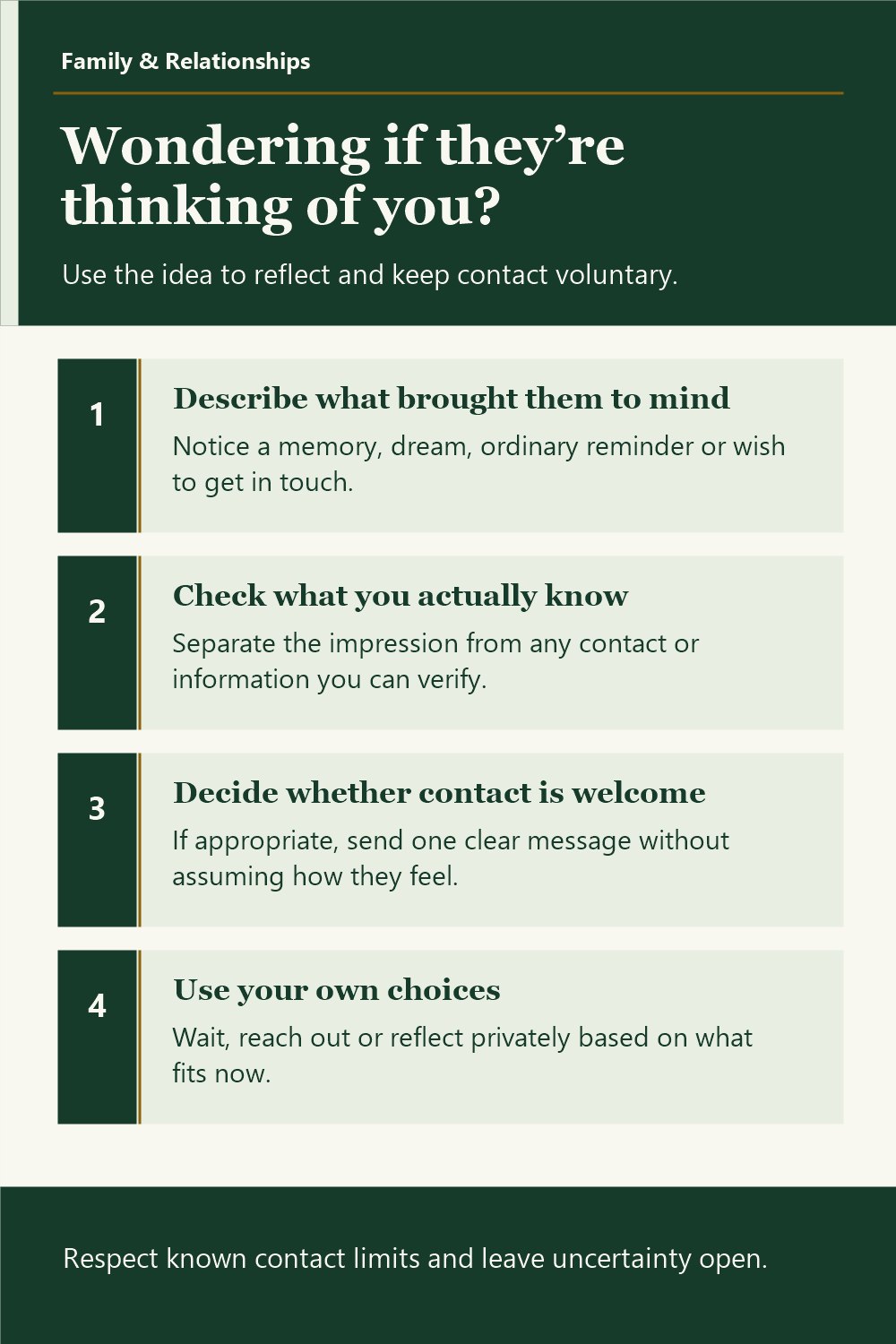
Read the infographic in text
Wondering if they’re thinking of you?
Use the idea to reflect and keep contact voluntary.
- Describe what brought them to mind Notice a memory, dream, ordinary reminder or wish to get in touch.
- Check what you actually know Separate the impression from any contact or information you can verify.
- Decide whether contact is welcome If appropriate, send one clear message without assuming how they feel.
- Use your own choices Wait, reach out or reflect privately based on what fits now.
Respect known contact limits and leave uncertainty open.