

Feeling attracted to someone and acting outside a relationship agreement are different things. Attraction can arise without a plan. Choices about messages, meetings, sexual contact and honesty still matter. Calling an affair “love” or “lust” does not tell you everything about what happened or excuse a broken agreement.
If you are trying to understand a difficult situation, begin with the behaviour and the expectations you shared. You do not need to rank which kind of betrayal should hurt more before deciding what you need next.
On this page
1. Separate attraction from actions
You might notice that someone is attractive, enjoy a conversation or have a passing fantasy without choosing to pursue them. Those experiences do not automatically establish an affair. What you do with an attraction, and how that fits the relationship you have agreed to, is a separate question.
People use “lust” to describe sexual desire and “love” to describe a range of caring or attached feelings. Those labels can overlap, change or mean different things to different people. They do not reliably tell you whether someone planned a meeting, how long contact lasted or whether the contact will continue.
If an attraction concerns you, decide what action would fit your commitments. That could mean declining a private invitation, changing a conversation that has become romantic or discussing an agreement before pursuing someone else. You do not need to pretend you have never noticed another person.
2. Name the relationship agreement
Ask what you have actually agreed about dating, sexual contact, flirting, private messages and emotional intimacy with other people. Some relationships are exclusive; others are consensually non-exclusive. An agreed non-exclusive relationship is different from hiding contact or breaking an exclusivity agreement.
A useful conversation describes behaviour rather than relying on a label: “What do we consider flirting?” or “Are we both agreeing not to pursue dates with anyone else?” You may discover that an expectation was never discussed. That is a reason to clarify it, without assuming that every misunderstanding was deliberate.
You do not have to accept every proposed boundary. Someone can state a preference, but it does not give them authority to isolate you, monitor your accounts or decide who you may speak to. Consider whether an agreement is mutual, freely chosen and workable for both of you.
3. Avoid guessing motives from clues
Frequent messages, a change in routine or emotional distance can prompt questions. They do not prove an affair or establish that another person is “in love.” Ask about the specific behaviour you have noticed if a conversation is safe and useful: “You said you were elsewhere, but the information I have does not match. Can we talk about that?”
A psychic interpretation, intuition or spiritual reflection may have personal meaning for you. It cannot verify private contact, establish consent or reveal another person’s intentions. Separate what you know from what you suspect before making decisions that affect your life.
Rather than seeking every detail, identify what information would help you choose. You might need to know whether contact is ongoing, whether an agreement was broken or whether shared resources were used. You can ask questions without making yourself responsible for proving every possible explanation.
4. Look for responsibility and respect
A relationship can have unmet needs or serious difficulties without making a partner responsible for someone else’s deception. Those difficulties may deserve their own conversation. They do not remove the responsibility to be honest about choices and agreements.
If you broke an agreement, describe what you did without shifting blame: “I chose to hide those meetings. That broke what we agreed.” Avoid demanding immediate forgiveness, minimising the impact or promising that a particular explanation makes it harmless. The other person can decide what contact they want.
If you were hurt, notice whether you are able to ask reasonable questions, express uncertainty and take time to think. Accountability involves more than an apology. Any proposed changes need to be specific enough that you can understand what is being offered, while respecting each person’s privacy and freedom.
5. Choose your next steps
You might want to continue the relationship, take a pause or end it. None of those choices requires a final verdict about whether the outside connection was love or lust. Consider the current behaviour, your wishes, practical responsibilities and whether you feel safe.
If you are considering repair together, discuss what it would involve: whether outside contact will continue, which agreements need to change and how you will review the situation. Counselling may be an option if you both want it; it does not guarantee reconciliation or replace action on the actual problem.
You are allowed time and support. Before changing housing, money arrangements or contact, think through the practical effects and seek appropriate help where needed. If you fear threats or retaliation, prioritise a safer plan with trusted or specialist support. Your next step can be based on the relationship available now, without forcing yourself to settle every question first.
Read the infographic in text
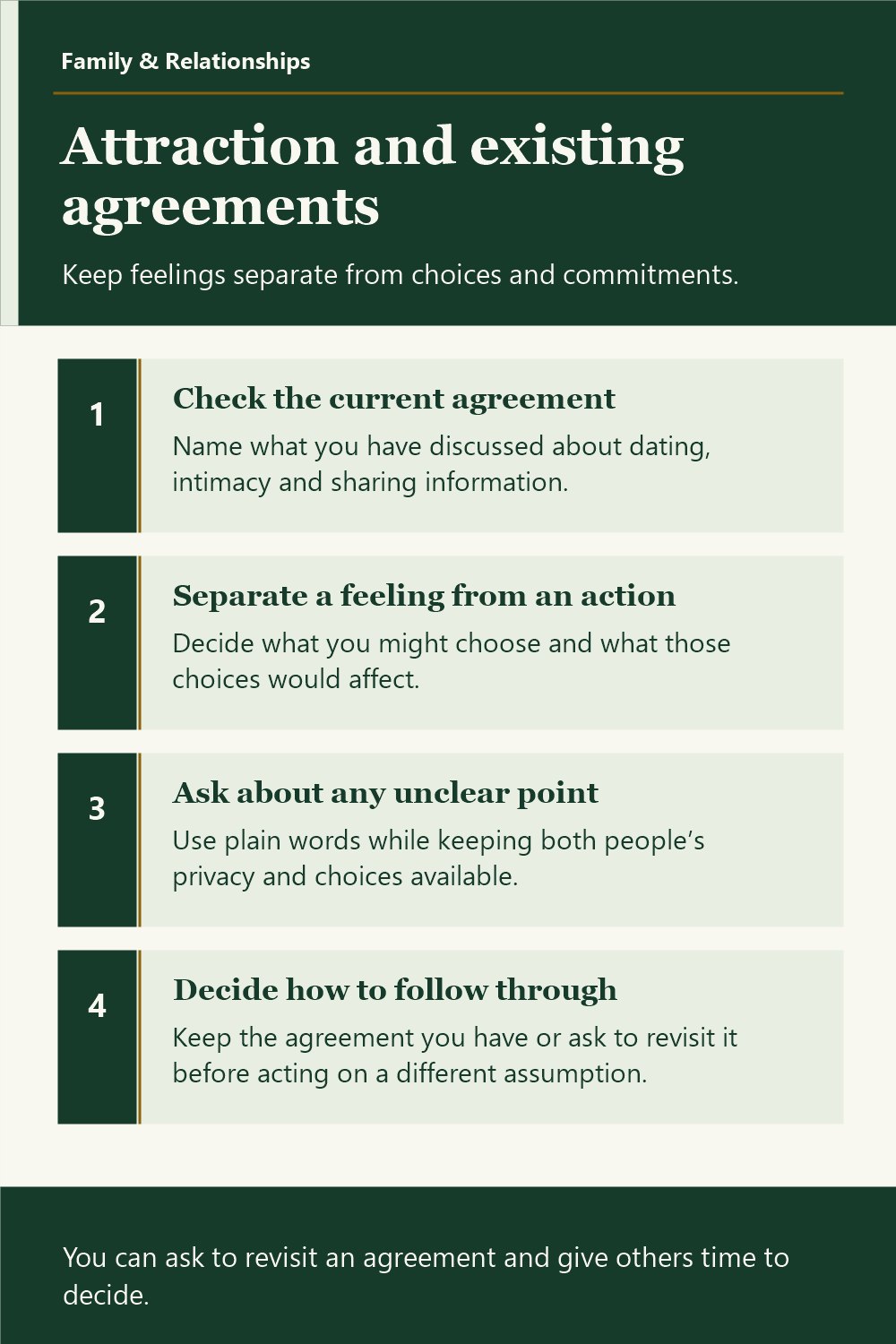
Attraction and existing agreements
Keep feelings separate from choices and commitments.
- Check the current agreement Name what you have discussed about dating, intimacy and sharing information.
- Separate a feeling from an action Decide what you might choose and what those choices would affect.
- Ask about any unclear point Use plain words while keeping both people’s privacy and choices available.
- Decide how to follow through Keep the agreement you have or ask to revisit it before acting on a different assumption.
You can ask to revisit an agreement and give others time to decide.