

Children often need several conversations to understand a separation. Begin with the changes that affect their day: where they will sleep, who will collect them and which familiar routines will continue.
Tell them directly that the adult relationship is not their fault or their responsibility to fix. You can be honest about unanswered questions while giving reliable information about the next few days. A joint announcement is appropriate only when it is safe and useful.
What children need from the first conversation
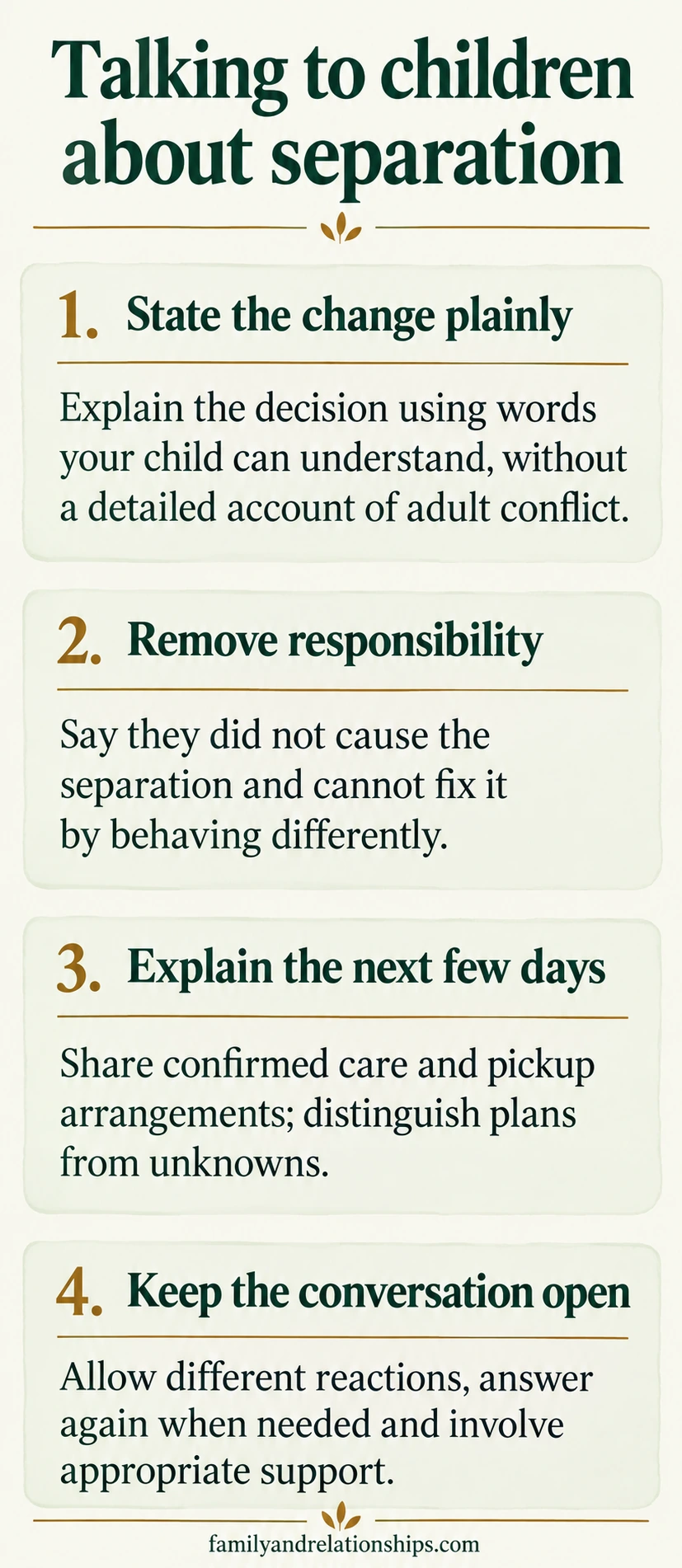
Read the guide as text
- State the change plainly. Explain the decision using words your child can understand, without a detailed account of adult conflict.
- Remove responsibility. Say they did not cause the separation and cannot fix it by behaving differently.
- Explain the next few days. Share confirmed care and pickup arrangements; distinguish plans from unknowns.
- Keep the conversation open. Allow different reactions, answer again when needed and involve appropriate support.
Preparing Your Message
Write down a short message about what the children need to hear before you talk about the conversation. In one sentence, include the decision that was made, the changes, and reassurance about responsibility and care.
You might say something like, "We've decided to live in separate homes. This is an adult decision. You didn't cause it, and you can't fix it. Here's what we know about the next few days." Don't write a speech that tries to explain the whole relationship. Children will remember a few details more clearly than a big emotional account that you tell them.
Justice Canada's parenting guidance discusses children's feelings and conversations about separation. Its guidance emphasizes listening and helping children understand the changes that affect them. Use professional resources to support a message suited to your child's age, development, and circumstances.
Pick a Comfortable Time and Place to Talk
When you're getting ready to tell your children about a separation or divorce, try finding a time and place where everyone feels comfortable and has a chance to talk. If possible, have the conversation somewhere familiar and private, without having to rush off to school, an activity, or bedtime right afterward. This gives your children time to ask questions, share their feelings, or simply spend some quiet time with you.
There's really no perfect time to have a conversation like this, and your family's schedule might limit your options. But try to avoid bringing it up when everyone is in a hurry or when your child won't have an opportunity to ask what happens next.
If you have more than one child, it might be helpful to share the basic information with everyone together and then make time to talk with each child individually. Remember that children of different ages might have different questions or need more time to understand what's happening. One child might want to talk right away, while another might need some time before they're ready to say anything.
It's also important to make sure that at least one adult can remain available after the conversation. Your child might want to go for a walk, have a snack, watch a favorite show, or simply spend time together without discussing the separation.
Remember that just because your child doesn't have much to say doesn't mean they aren't upset or confused. Sometimes children need time to process difficult news before they can explain how they're feeling. The important thing is letting them know you're there whenever they're ready to talk.
Deciding If Talking Together Is the Best Option
When parents are able to communicate respectfully and safely, telling their children about a separation or divorce together can sometimes make the conversation easier. It gives both parents an opportunity to share the same basic information and helps prevent children from hearing completely different explanations about what's happening.
Before having the conversation, try agreeing on what you'll say and how you'll explain the changes. Keep the focus on helping your children understand the situation instead of bringing up disagreements or blaming each other. This isn't the time to argue about what went wrong in the relationship or correct each other's version of events.
But remember that talking to your children together isn't always the best choice. If one parent has a history of threatening, intimidating, blaming, or controlling the other, a joint conversation could create more problems. In those situations, speaking with the children separately or getting professional guidance about a safer approach might be more appropriate.
You also shouldn't delay an important decision involving safety just because you and the other parent can't agree on how to explain things. Depending on your circumstances, a qualified family professional, domestic violence advocate, or legal adviser might be able to help you figure out the safest way to move forward.
The most important thing is making sure your children receive a clear, caring explanation that helps them understand what they need to know. They shouldn't feel like they have to decide which parent is right or figure out why one parent isn't part of the conversation.
If you're explaining the situation on your own, you might say something simple like, "I want to explain what I know about what's going to happen and answer any questions you have."
Your children don't need you and the other parent to pretend that everything is perfect. They need reassurance, honesty that fits their age, and the opportunity to feel supported while adjusting to the changes happening in their family.
Don’t Blame Others
Children need explanations they can understand, but they don't need evidence about affairs, sexual difficulties, finances, or private messages. Detailed blame can give them information they aren't able to use and make them feel pressured to pick sides.
You can say something like, "We've had problems in our relationship that we've not been able to solve yet, and we've decided to live apart." Make sure the wording you're saying is honest and true.

Don't make a false claim that the agreement is mutual if the decision wasn't. You can explain the plan without saying who the villain is. You can say something like, "The decision is that we're going to live separately. The adults are responsible for working out these arrangements."
If there has been abuse, don't minimize the harmful behavior or try to teach your child that this is normal. Use age-appropriate help and seek a specialist who can talk to your child. Make sure you're being honest and using language that supports safety without making the child have to deal with adult problems.
Tell Them It Isn’t Their Fault
Children might think that the separation is about an argument, homework, having a hard time at bedtime, or something they wished for while they were angry. Tell them directly that what they did, or their behavior, didn't cause the relationship to end.
Explain that behaving perfectly, mediating between parents or trying to bring them together is not the child's responsibility and cannot make them responsible for repairing the adult relationship. A child shouldn't have to earn stability through certain kinds of behavior.
The American Academy of Pediatrics offers guidance on helping children adjust to divorce, including keeping children out of adult disputes and avoiding the messenger role.
When they need it, try to reassure them instead of saying one thing you think should settle their fear. You can say something like, "You're not in charge of fixing this. You're allowed to ask questions and tell me what you need." Keep the adult responsibilities with adults through your words and actions.
Help Your Children Understand What Happens Next
When you're telling your children about a separation or divorce, they might have practical questions before anything else. They might want to know where they'll sleep, who will take them to school, whether they can bring their favorite blanket, or if they'll still get to see their friends. These questions might seem small to adults, but they're important to children who are trying to understand how their everyday lives are going to change.
Try focusing on what you already know about the next few days instead of talking about everything that might happen months from now. Sometimes using a simple calendar, drawing a picture, or writing down the schedule can help children understand what to expect, especially when they're feeling overwhelmed.
It's also important to explain the difference between plans that have already been decided and things that are still being worked out. For example, saying, "You'll be staying here this weekend," lets your child know what's definitely happening. But saying, "We're hoping this will be our regular schedule," makes it clear that some arrangements might still change. Try not to make promises about the future until you're reasonably sure you can keep them.
If your child asks something you don't have an answer to, it's okay to be honest. You might say, "We haven't figured out our holiday plans yet, but I'll let you know more after we've talked about them next week." This shows your child that you're taking their question seriously without pretending that everything has already been decided.
Just make sure you're realistic about when you'll have more information. If you promise an update, follow through even if the answer is still uncertain. Sometimes simply knowing that you haven't forgotten their question can help children feel more secure.
Explaining Things in a Way Your Child Can Understand
Children of different ages don't always understand separation and divorce in the same way, so it's important to think about how you explain what's happening. Younger children often need simple words, clear examples, and plenty of reassurance. They might understand something like, "Mom will be living here, and Dad will be living in another house," more easily than a long explanation about why the relationship ended.
School-age children might have more questions about why their parents are separating, whether it's fair, how their schedules will change, or if the decision is permanent. Try answering what they're actually asking instead of overwhelming them with information they might not be ready to understand.
Teenagers might want more details about how the separation will affect their everyday lives. They might be concerned about school, friendships, part-time jobs, privacy, or activities they enjoy. It's important to listen to their opinions and consider how the changes will affect them. But remember that giving teenagers a voice doesn't mean making them responsible for deciding which parent they should live with or handling legal decisions between adults.
It's also important to remember that every child communicates and processes information differently. Some children might benefit from pictures, written schedules, familiar words, or having extra time to think before responding. Children with disabilities, language differences, or other communication needs might also benefit from support that's appropriate for their situation.
Don't assume that a child who speaks confidently is handling everything well or that a child who doesn't ask many questions understands less. Some children talk openly about their feelings, while others need more time before they're comfortable sharing.
The important thing is helping your child understand what's happening without giving them more information or responsibility than they can comfortably handle. Being patient, answering their questions honestly, and continuing to offer reassurance can help them feel supported as they adjust to the changes in their family.
Stop Trying to Manage the Outcome
A child can cry, get angry, ask questions, go back to the game, or show any reaction. Feelings might show up later, but there's no required response that shows the conversation went well.
Reflect on what you hear, such as "You're worried about changing schools." You don't have to try to change the child's mind about whether the separation is good before listening to their distress.
Don't ask them for reassurance about your parenting choices. Don't try to make the child responsible for comforting you, and if you need support, talk to another adult.
You're allowed to be emotional without asking the child to be an adult. If you need to cry, then do it and then say, "I'm sad, and I have people that are helping me. You don't have to take care of me." Then go back to the child's needs.
Be Honest
Children might ask if you want to get back together. Your answer should tell them what is really known. If the decision is final, don't leave hope because that answer feels less painful.
You might tell them, "We're not planning to live together again. I know that's upsetting, and you can talk to me about it." If the situation isn't decided, explain that you're not sure without asking the child to wait for an outcome.
Do not make a child responsible for persuading the other parent to change or deciding whether contact is safe. Explain restrictions in age-appropriate words and follow applicable safety and legal guidance. That can make the child feel that they have to persuade, monitor, or report an adult.
Children might ask the same question over and over again. You can answer it consistently while being kind. Repetition might be part of trying to understand the hard change instead of a sign that you need to give them more adult details or a better explanation.
Don't Put Your Children in the Middle
When you're going through a separation or divorce, it's important to keep your children out of disagreements and personal concerns involving the other parent. You might be curious about what's happening when your child is staying at their other parent's home but try not to ask questions about who was visiting, what the other parent said, or whether they seemed upset. There's nothing wrong with wanting to hear about your child's day, but those conversations shouldn't turn into a way to gather information about the other household.
It's also important not to make children responsible for passing along messages about schedules, money, or legal matters. These are adult responsibilities and should be handled directly between the parents whenever it's appropriate and safe. If communicating with the other parent is difficult, a structured communication system or help from a qualified professional might be useful.
Remember that children can sometimes see or hear more than adults realize. They might come across private messages on a shared phone or tablet, overhear conversations, or see paperwork related to the separation. Try keeping disagreements, legal documents, and personal conversations away from areas and devices your children regularly use, while following any legal requirements or safety guidance that applies to your situation.
But if your child brings up something concerning on their own, take the time to listen calmly. Give them an opportunity to explain what happened without repeatedly questioning them or suggesting what they should say. You also shouldn't ask them to collect proof or investigate what's happening in the other home.
If what your child shares makes you concerned about their safety or well-being, seek appropriate guidance from a qualified professional, child protection service, or emergency services, depending on the situation.
The important thing is protecting your child from feeling responsible for solving adult problems. Where contact is safe and appropriate, children should be able to enjoy it without feeling expected to report everything that happens.
Work With Trusted Adults to Support Your Child
Sometimes having other trusted adults involved can help children feel more comfortable and supported during a separation or divorce. Teachers, childcare providers, school counselors, and other professionals might be able to offer reassurance or help maintain a familiar routine while your family adjusts to the changes.
You don't have to share every detail of your relationship or explain everything that led to the separation. Instead, focus on the information that will actually help someone support your child. For example, a teacher might need to know about changes to pick up arrangements, whether your child has been having a difficult time adjusting, or who they can contact if something comes up during the school day.
It's also a good idea to ask how any personal information will be handled and who will have access to it. Just because your family is going through a difficult time doesn't mean everyone in your child's life needs to know about it. Older children, especially teenagers, might have stronger feelings about their privacy, so it's important to consider what they're comfortable sharing when appropriate.
If there are custody arrangements, legal documents, or safety restrictions that affect your child's school or daily routine, make sure you follow the proper procedures for providing that information. Rules and requirements can vary depending on where you live, and simply telling someone about an arrangement might not always be enough.
You can also explain to your child why certain adults know about the changes happening at home. For example, you might say, "Your teacher knows that some things are changing in our family, and she's someone you can talk to if you're having a hard day at school."
But avoid promising that a teacher or counselor will keep everything your child shares completely secret. Professionals sometimes have responsibilities to report concerns about safety or harm, and they should explain those limits in a way your child can understand.
The goal is to make sure your child has people they can turn to without feeling like their personal life is being shared with everyone. Having a few trusted adults who understand what's happening can provide more support and stability while your family works through the changes.
Pay Attention to Changes
If there are changes in sleep, appetite, school participation, friendships, or behavior, it might show the child needs more support. A hard day doesn't mean a diagnosis, but if there are a lot of changes, this needs more attention.
Talk to the pediatrician, family doctor, school support team, or qualified child mental health professional when you feel concerned, things get worse, or it interferes with their daily life. Get urgent help if there are immediate safety concerns, like threats of suicide or self-harm.
You can ask your child, "What part of the day feels the hardest right now?" instead of demanding that they tell you everything they're feeling. A good answer might show a change you can make, such as having a better pickup routine.
Notice their strengths as well, such as good friendships, calming activities, or good relationships they have with other adults. Support can mean keeping what helps, as well as responding to the child's distress. Children don't have to have every conversation to be noticed.
Getting Ordinary Care
Having a discussion is just a start, and you can go back to the subject when you're walking, driving, or doing other calm activities. Ask if there's something new the child wants to tell you, and then allow them to answer you, even with short answers.
If you handled a situation poorly, talk about it. You can say something like, "I shared a detail that you didn't need to carry. I'm sorry. I'll handle the issue as the adult." Repair lets you model adult responsibility without expecting the child to comfort or immediately forgive you.
Don't measure success by whether your child stops feeling sad. The purpose is to give them truth, good care, limits, and a place for their feelings.
Your family might not have every arrangement settled yet, but you can still offer something for today, such as a clear expectation, answers to their questions, and adult responsibilities for future decisions. This kind of consistency allows the conversation to safely continue.
Prepare a child-focused separation conversation
Choose an age group for wording to adapt to the plans you can actually confirm.
Use only accurate, confirmed plans. Safety concerns, parenting orders or professional advice may change how and when this conversation should happen.
Use the questions and examples in the article above; the draft builder needs JavaScript.
15 questions readers ask
1. What should I say first?
Explain the change in simple words, say it is an adult decision and describe what is known about the next few days.
2. Should we tell the children together?
Only when a joint conversation is safe and respectful. Intimidation, abuse or legal restrictions may call for a different approach with professional guidance.
3. Do we need to explain why the relationship ended?
Offer an honest age-appropriate explanation without private sexual details, accusations or evidence children cannot use.
4. What if the separation was not a mutual decision?
Do not falsely describe it as mutual. Explain the practical decision and keep responsibility for arrangements with the adults.
5. How do I explain that it is not their fault?
Say directly that their behavior, wishes or mistakes did not cause the separation. Repeat the reassurance through words and dependable care.
6. Should I promise that nothing will change?
No. Explain what will change and what can reliably remain. Avoid promises about schedules or reconciliation you cannot keep.
7. What if I do not know the answer?
Say what remains undecided and when you will update them. Follow through even if the answer is still uncertain.
8. How should I talk with a young child?
Use short concrete language about homes, care and routines. Pictures or a simple calendar may help them understand.
9. Do teenagers need more information?
They may need more detail about practical effects and space to express preferences. They should still not carry adult legal decisions or relationship confidences.
10. What if my child says very little?
Do not assume they are unaffected or force an immediate reaction. Stay available and allow questions to return later.
11. Can I cry during the conversation?
You can show feelings while making clear that other adults support you. Your child should not become responsible for comforting or protecting you.
12. Should children carry messages between parents?
No. Schedules, money and legal communication belong with adults through an appropriate safe route.
13. What if a child reports something worrying?
Listen calmly without repeated leading questions or asking them to investigate. Seek qualified child-safety or emergency guidance according to the concern.
14. Should I tell the school?
Share practical information needed to support the child, such as pickup changes and relevant restrictions. Ask about privacy and follow proper procedures.
15. When should I seek more support?
Seek help when distress worsens, persists or interferes with daily life, or whenever you are concerned. Immediate danger or self-harm concerns require urgent support.