

A relationship can feel unusually familiar, intense or full of repeating lessons. If you understand love through a spiritual lens, you may describe that connection as karmic. The description can hold personal meaning without telling you whether the relationship is safe, respectful or right for you.
Use the idea as a starting point for reflection. The choices available to you still depend on what happens between you, what you want and what support you can access.
On this page
Understand what the label can tell you
People who use “karmic relationship” may connect it with past lives, unfinished lessons or personal growth. Those interpretations vary. Cleveland Clinic explains that the phrase is a spiritual concept rather than a clinical term with a defined set of symptoms. A checklist cannot establish that you shared a past life or predict when the relationship will end.
You can value a spiritual interpretation while asking ordinary questions about the relationship. Can you disagree freely? Are your plans being respected? Do you want the same arrangement? Meaning and compatibility are separate questions, and you are allowed to consider both.
Look at the patterns behind the intensity
Instead of counting “karmic signs,” describe a few things you have actually noticed. These patterns deserve attention because of their effect on you, whatever name you give the connection:
- A pace you have not chosen. You may enjoy strong attraction yet want more time before sharing money, moving in or making a commitment. Notice whether asking to slow down is accepted.
- The same disagreement returning. Consider what happens after making up. Has the practical problem changed, or have affection and apologies replaced a decision about it?
- Closeness offered on one person’s terms. Are meetings, conversations and decisions arranged only when they suit your partner? An uneven week can happen; a continuing arrangement still needs room for your preferences.
- Your world getting smaller. Notice whether you have less room for friends, rest, work or activities you value. Ask whether this follows a freely chosen adjustment, a practical pressure or someone else’s demands.
A quick beginning or a short relationship is not, by itself, evidence of harm. Nor does a difficult period reveal a spiritual cause. Look at the particular behaviour and the choices each person has, rather than treating intensity as a verdict.
Check whether care leaves room for limits
Needing support is part of life. You might rely on a partner during illness, caring responsibilities or a difficult financial period. That does not automatically make the relationship unhealthy, and you do not have to become completely self-sufficient to deserve respect.
Look at how support is offered and received. Can someone say that a request is beyond what they can manage? Can either person decline sex, keep a conversation private or spend time with other people? Does help become a reason to demand obedience?
The love is respect guide to boundaries and expectations explains why specific, openly discussed limits matter. A partner may have different wishes, but pressure or punishment is not a fair way to resolve the difference.
Try a practical relationship check
Choose one recurring situation, such as a cancelled plan or a conversation that becomes insulting. If keeping notes is safe for you, separate three points:
- What happened? Describe the action: “Our plan was cancelled after I had already travelled,” rather than deciding what the other person must secretly feel.
- What do you need? Name a concrete request, such as earlier notice or a pause when a discussion becomes hurtful.
- What followed? Notice whether you could speak, what was agreed and whether the next similar situation was handled differently.
This is a way to organise your thoughts, not a score that tells you to stay or leave. You can also talk it through with someone who listens without deciding for you. For limits involving relatives or family expectations, read Family Boundaries: How to Set Limits Without Cutting Ties.
Find support for your next choice
You do not owe someone continued access to you because the relationship feels destined or because you hope to learn from it. Harm is not a debt you must repay. You can find meaning in an experience without remaining in it or forgiving before you are ready.
If there are threats, fear or controlling behaviour, seek individual support before arranging a confrontation or departure. A domestic abuse advocate can help you consider a personal safety plan that fits your circumstances. If anyone is in immediate danger, contact local emergency services from a safe place.
You may choose to discuss an issue, change an arrangement, take distance or end the relationship. Start with the support and practical step you need now. A spiritual label does not remove your right to choose.
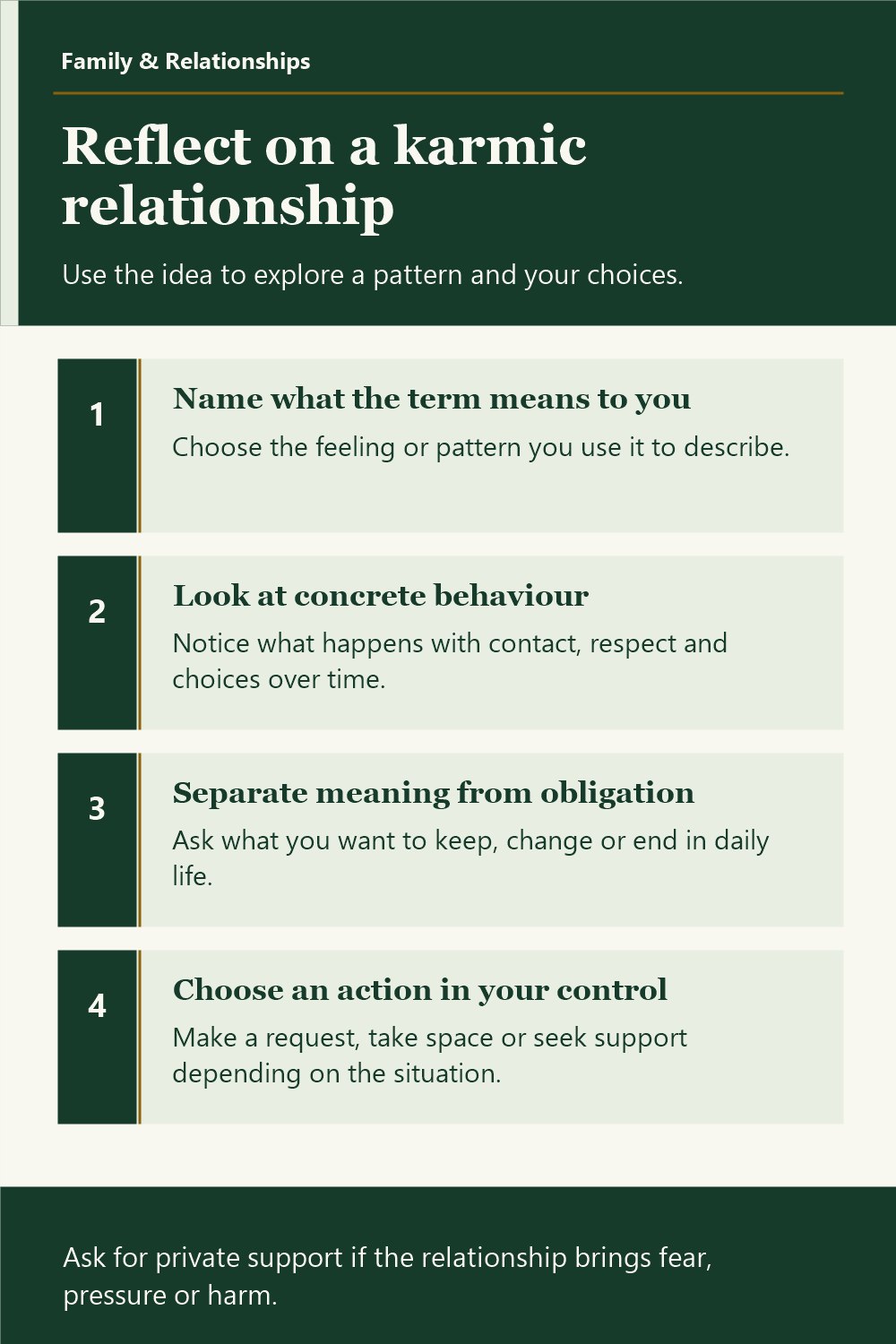
Read the infographic in text
Reflect on a karmic relationship
Use the idea to explore a pattern and your choices.
- Name what the term means to you Choose the feeling or pattern you use it to describe.
- Look at concrete behaviour Notice what happens with contact, respect and choices over time.
- Separate meaning from obligation Ask what you want to keep, change or end in daily life.
- Choose an action in your control Make a request, take space or seek support depending on the situation.
Ask for private support if the relationship brings fear, pressure or harm.