

You can take a break from dating because you want more room in your life. You do not need a dramatic reason, a certain number of disappointing dates or a plan to become a different person before you return.
A pause can be brief, open-ended or limited to one part of dating, such as using apps. It may help to ask what you want less of and what you want room for. The answer can be ordinary: fewer notifications, an unhurried weekend or time to think about what you enjoy.
In this article
Decide what you are pausing
“A break from dating” can mean different things. You might stop arranging new dates while deciding about an existing connection. You might want no romantic contact for now. Or you may enjoy meeting people in person while finding the apps tiring.
Choose a boundary you can describe. For example: “I am not arranging dates this month,” or “I am taking the app off my phone and will reconsider later.” A review date can be useful, but it is not a deadline to feel interested again.
Check what an app’s pause, visibility or account option actually does before relying on it. Removing the app from your phone may leave the profile active. Review any paid subscription separately. You can make these decisions without deleting conversations or information you still need.
A pause does not change an existing agreement automatically. If you are in a relationship and considering time apart, discuss what you mean where it is safe to do so. The other person needs an honest understanding of the relationship, rather than an unexplained change in contact.
Tell current dates what is changing
If someone is expecting another date, a brief message can prevent avoidable uncertainty: “I have decided to step back from dating, so I won’t be arranging another meeting. I wanted to let you know.” You do not have to provide private details or make a promise to reconnect.
Be clear if you are ending a connection. Calling it a temporary break when you already know you do not want to continue can leave the other person waiting. If you are uncertain, you can say so without asking them to put their own life on hold.
Respect goes both ways. They may feel disappointed or prefer no further contact. You can acknowledge that without changing your decision. Repeated pressure, insults or unwanted contact do not require a longer explanation; consider support and safer contact boundaries if you feel concerned.
Make practical room in your week
Think about what dating was using: time, money, attention or emotional effort. Then decide whether you want to redirect any of it. You might keep an evening free, reduce spending or arrange a low-pressure visit with a friend.
You do not have to fill every space with a goal. Rest, an ordinary meal or doing nothing in particular can be welcome. A dating pause does not need to produce a new body, a promotion, wealth or a flawless routine.
If you miss companionship, look for the kind you want. A shared activity, a call with someone familiar or time in a community group may suit you. These connections need not become substitutes that fulfil every need. It is possible to value your time alone and still want affection or romance.
Try one change for a week and notice its effect. If evenings feel lonelier than expected, consider planning some company. If you feel relieved by fewer messages, keep that boundary. The useful information is how the arrangement works for you.
Keep other people’s expectations in perspective
Friends or family may ask whether you have met someone. You can keep the answer simple: “I’m not dating at the moment, and I’m comfortable with that.” If repeated questions are unwelcome, add: “I’ll bring it up if I want to talk about it.”
Being single does not require a defence, and wanting a partner is not a weakness. You do not have to adopt a particular view about marriage, children, sexuality or independence to justify a pause. Larger decisions deserve their own time, information and consideration.
A break may create room to reflect on what has felt good or difficult. Focus on specific experiences: conversations that were enjoyable, pressure you did not like or differences in expectations. Avoid turning a few dates into a rule about all men or all future relationships.
Review the pause on your own terms
When you want to review it, ask whether you feel interested in meeting someone and whether dating fits the time and attention available. You can return slowly, continue the pause or decide that you do not want to date. There is no required sequence.
If you return, choose one boundary to carry with you: fewer simultaneous conversations, clearer invitations or evenings when you do not check messages. You can revise the arrangement as you learn what suits you.
If fear about the future is driving the decision, When You Worry You Will Never Find Love offers related questions. If a particular person has been hurtful or controlling, read When a Partner Is Hurtful or Controlling: Patterns, Choices and Support.
The purpose of a pause can simply be to give yourself more choice about how you spend your time. You do not have to earn permission to take it.
Read the infographic in text
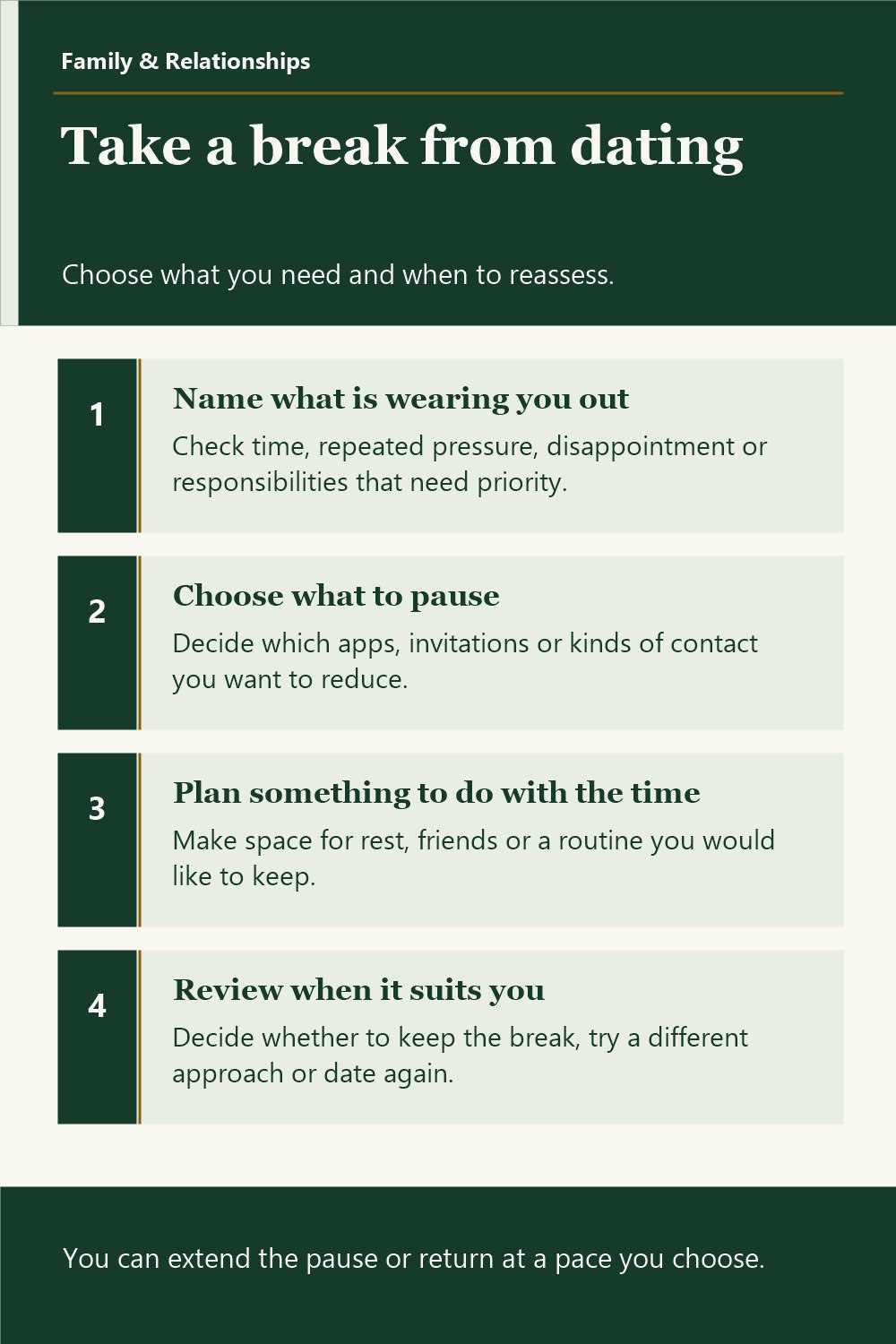
Take a break from dating
Choose what you need and when to reassess.
- Name what is wearing you out Check time, repeated pressure, disappointment or responsibilities that need priority.
- Choose what to pause Decide which apps, invitations or kinds of contact you want to reduce.
- Plan something to do with the time Make space for rest, friends or a routine you would like to keep.
- Review when it suits you Decide whether to keep the break, try a different approach or date again.
You can extend the pause or return at a pace you choose.