

Looking for a soulmate can mean hoping for a relationship in which you feel known, cared for and able to build a life together. For some people, the word also carries a spiritual meaning. You can value that hope while taking time to discover who a person is and whether you both want the same kind of connection.
There is no reliable sign that can identify one destined partner or promise a lasting relationship. You do not need to become someone else’s “other half” to deserve love. Begin with your own preferences, the opportunities available to you and the ways two people choose to treat each other.
On this page
Define the connection you want
Ask what “soulmate” means to you in everyday terms. Perhaps you hope for someone who enjoys family life, respects your faith, welcomes your humour or can discuss difficult decisions. Naming those qualities gives you something more useful than waiting for an unmistakable feeling.
Separate the needs that matter to your life from preferences you could be flexible about. Wanting children, needing respect for your identity or seeking an exclusive relationship may affect whether a partnership works for you. A shared hobby or an imagined first meeting may be less important.
If you believe in soul connections, consider how that belief supports your choices. A feeling of familiarity can be meaningful to you without establishing that someone is trustworthy or entitled to lead your life. Mutual consent and respect still matter, whatever name you give the bond.
Make room to meet people
Choose one realistic way to meet others that fits your energy, interests and responsibilities. You might attend a regular community activity, ask a friend about introductions or try a dating app. The aim is to create opportunities for conversation, not to turn your life into a search campaign.
A repeat activity can give you time to get to know people in context. Choose something you would enjoy even if no romance develops, and respect that other participants may be there for the activity alone. Friendliness is not an agreement to date.
If you use an app, describe the relationship you are interested in honestly. Before meeting someone new, agree on a public place, arrange your own way home and let a trusted person know your plan. You can decline a meeting or change your mind without having to prove that the person is unsuitable.
When work, parenting or caring leaves little free time, a small step can be enough for now. Pausing the search is also a choice; it does not close your future.
Explore values through conversation
Compatibility becomes clearer through specific conversations and experience. As the connection develops, ask questions that fit the stage you are at:
- Intentions: “What kind of relationship are you open to?”
- Daily life: “How do you like to balance time together and time to yourself?”
- Family: “What place do children or caring responsibilities have in your life?”
- Differences: “How would you want us to raise a concern or change a plan?”
You do not need to cover every future decision on a first date. Share enough to understand important differences, then allow time for actions to add context. Notice whether both people can ask questions, listen and say no without pressure.
The NHS guidance on healthy relationships offers useful ideas for open communication and boundaries. You can use these as starting points for a conversation rather than a scorecard that declares someone your soulmate.
Stay connected to your own life
A new relationship can be absorbing, especially when it feels unusually significant. Keep space for friendships, interests, rest and the commitments that matter to you. A partner can become important without becoming your only source of company, advice or support.
Nor do you need perfect confidence or constant happiness before dating. It is reasonable to want reassurance and care. The question is whether both people’s needs have room, including the need for privacy, practical help or a slower pace.
Be cautious if someone uses destiny or spiritual authority to demand money, sexual access, secrecy or distance from people you trust. A special connection does not remove your freedom to choose. If you feel afraid or controlled, seek confidential support from a local domestic-abuse service before confronting the person.
Let mutual interest guide the next step
When you would like to see someone again, make a clear invitation: “I enjoyed talking with you. Would you like to meet for coffee next week?” Give them room to answer, and take a refusal or request for space seriously. You cannot create a shared relationship through persistence alone.
If interest is mutual, choose a manageable next plan and learn a little more about each other. Strong attraction need not be rushed into exclusivity, shared finances or major family changes. Discuss those choices when they become relevant, rather than treating them as tests of devotion.
After a date, ask yourself: Did I feel listened to? Could I be honest? Do I want another meeting, or am I mainly afraid of losing a possibility? Your answer can change as you learn more. Finding a meaningful connection involves two people’s choices, and you are allowed to keep your own needs in view throughout.
Read the infographic in text
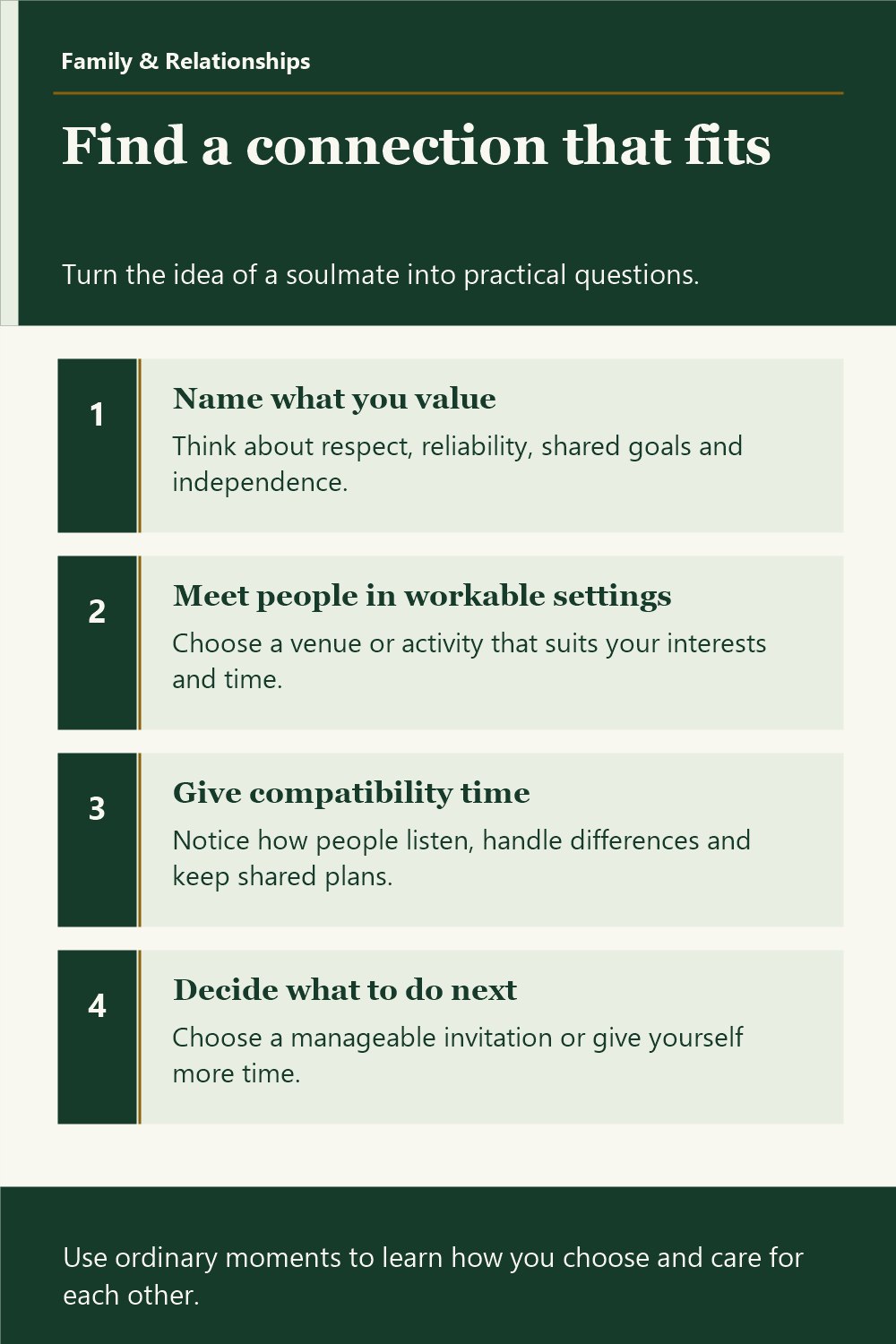
Find a connection that fits
Turn the idea of a soulmate into practical questions.
- Name what you value Think about respect, reliability, shared goals and independence.
- Meet people in workable settings Choose a venue or activity that suits your interests and time.
- Give compatibility time Notice how people listen, handle differences and keep shared plans.
- Decide what to do next Choose a manageable invitation or give yourself more time.
Use ordinary moments to learn how you choose and care for each other.