

Wondering whether your ex misses you can make an ordinary message or chance encounter feel significant. They may miss you, miss a familiar routine, want friendship or simply have a practical reason to get in touch. You cannot reliably distinguish those possibilities from hints alone.
Missing someone and wanting to rebuild a relationship are also different things. The most useful questions are what your ex has actually said, whether contact is welcome to both of you and what you want now. You do not need to solve their feelings before deciding on your own boundaries.
On this page
1. Repeated encounters: consider your comfort
You may see an ex because you share a neighbourhood, workplace, friendship group or children’s activities. A meeting in a familiar place does not establish that they arranged it or want to reconcile. You can be polite, keep the exchange brief or choose not to talk.
Notice whether your preferences are respected. Repeated unwanted appearances, following or contact that makes you afraid deserve attention as safety concerns, rather than romantic proof. The National Domestic Violence Hotline’s stalking safety guidance describes these patterns and ways to seek support.
If you feel unsafe, consider speaking with a local support service and a trusted person. Save unwanted messages or details of incidents where safe. Blocking or confronting someone can affect risk, so seek advice suited to your circumstances rather than feeling obliged to respond or meet.
2. Messages: look for a clear purpose
A message may concern belongings, shared bills, work or parenting. It could also be a friendly check-in or an attempt to talk about the relationship. Start with what the message actually asks instead of treating the fact of contact as a declaration.
If contact is welcome and you want clarity, you might ask, “Are you hoping to discuss getting back together, or are you checking in as a friend?” You are allowed to ask a straightforward question. They are allowed to be unsure or say no, and you can decide that continued ambiguity is not helpful for you.
Where you need to communicate about children or another shared responsibility, keep that practical channel separate from discussions about romance. Necessary contact does not oblige either person to consider a reunion.
3. Social media: keep interpretations limited
A like, comment or story view gives you little information about someone’s intentions. It may reflect curiosity, habit, friendliness or something else. Posting an old song or appearing happy online is not a reliable message about you.
Notice how checking affects your own day. If you keep returning for reassurance and feel worse afterwards, consider muting updates, changing what you share or taking a break from looking. Choose a limit for your own attention, rather than a tactic intended to make your ex chase you.
Avoid testing their reaction with jealousy posts, fake accounts or messages through other people. These can add confusion and intrude on privacy without answering the question you care about.
4. Questions through friends: protect privacy
Hearing “Your ex asked about you” may bring hope or discomfort. It still does not tell you whether they want to reconnect, and second-hand reports can lose context. You do not have to ask friends to investigate or deliver messages.
Tell people what would help: “Please don’t share my plans or dating updates,” or “I would rather not hear reports about my ex right now.” Friends can care about both of you without becoming messengers.
Keep children out of these questions. They should not have to report on a parent’s dating life, pass along romantic messages or decide whether adults should reunite.
5. Dating questions: choose what to share
An ex asking whether you are seeing someone might be curious, jealous or considering a conversation about reconciliation. The question itself does not establish which. Your dating status is yours to share or keep private.
You can answer briefly, decline to discuss it or ask why they want to know if you feel comfortable doing so. A response such as “I’m keeping that part of my life private” does not need a further justification.
If you are interested in reconnecting, discuss that openly rather than using another relationship to prompt a reaction. Consider the expectations and choices of anyone else involved too.
6. Shared memories: nostalgia is not a plan
A photo, familiar joke or memory may mean your ex is remembering a meaningful part of your time together. You can appreciate that without assuming they want the relationship back. Someone can miss good moments while believing the breakup was right.
If they clearly say they want to try again and you are interested, move from memories to present questions. What led to the breakup? What, specifically, would be different? Do both people want the same kind of relationship, and are those changes realistic?
Look for behaviour over time rather than a promise made during an emotional conversation. The NHS guidance on relationships and wellbeing emphasises communication, boundaries and support. Familiarity alone cannot settle whether a new arrangement would work for you.
7. Decide what contact you want
You can miss an ex and still prefer distance. You can also be open to one conversation without agreeing to restart the relationship. Before replying, consider whether contact feels welcome, what you hope to learn and what limits you want to keep.
If you choose to ask about reconciliation, accept a clear no and respect requests for no contact. If the answer stays vague, you can step back instead of repeatedly searching for signs. You do not owe someone a reunion because they miss you, and they do not owe you one because you miss them.
Keep practical arrangements manageable and make room for friendships, rest and activities beyond this question. Your next step can be based on what is clear and workable now, even if you never know exactly what your ex feels.
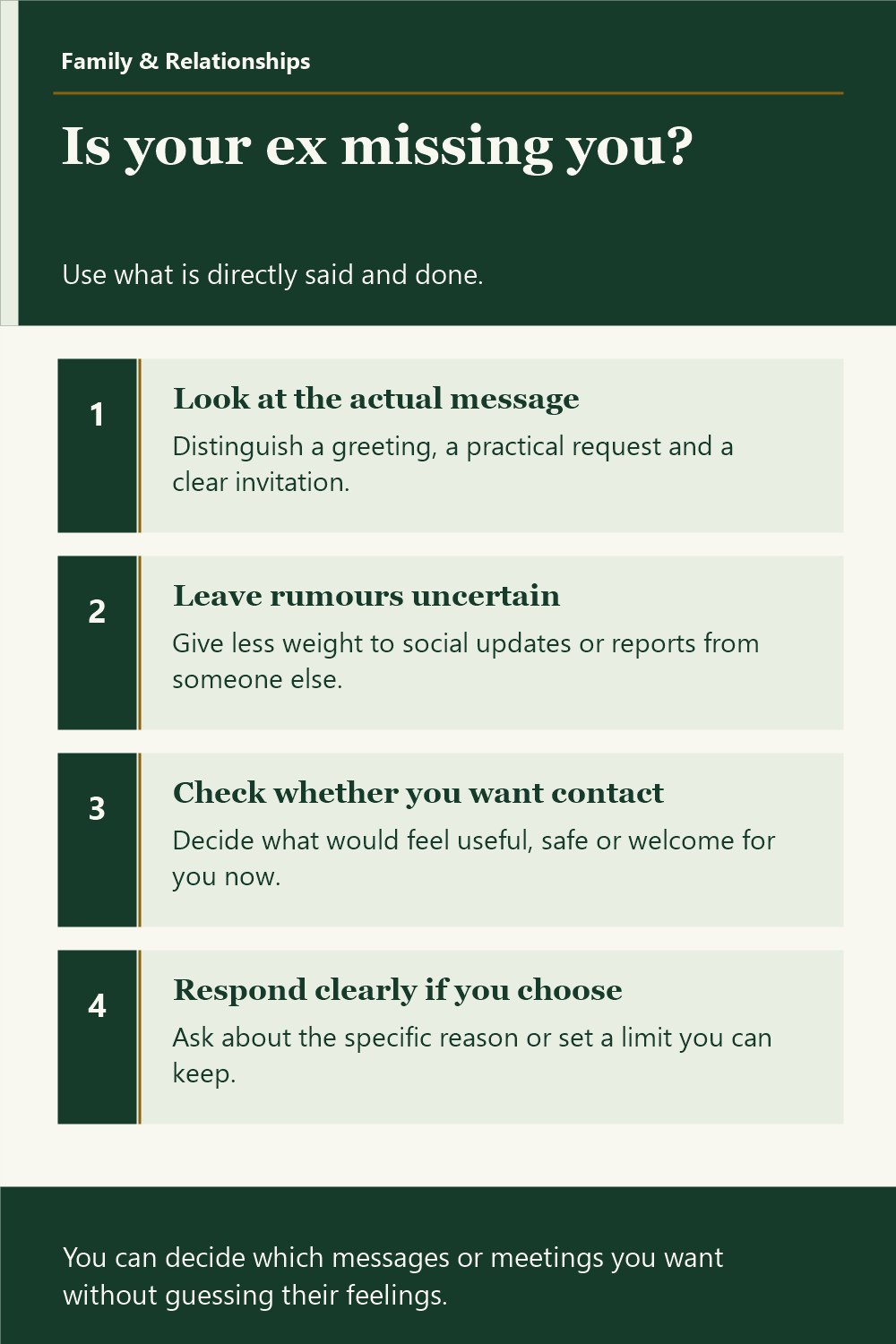
Read the infographic in text
Is your ex missing you?
Use what is directly said and done.
- Look at the actual message Distinguish a greeting, a practical request and a clear invitation.
- Leave rumours uncertain Give less weight to social updates or reports from someone else.
- Check whether you want contact Decide what would feel useful, safe or welcome for you now.
- Respond clearly if you choose Ask about the specific reason or set a limit you can keep.
You can decide which messages or meetings you want without guessing their feelings.