

You may agree to something and later realize you felt uneasy, exhausted or overlooked. Staying true to yourself begins with noticing that response and considering what you need, alongside the needs and commitments of the people involved.
Self-respect can include compromise, care and responsibility. You do not have to put every preference first, or silence your own feelings to keep a relationship comfortable.
1. Notice the moment you begin to override yourself
Choose a recent, manageable example: accepting another task when your day was full, agreeing to a plan you could not afford, or saying that a hurtful comment was fine. Describe what happened without turning it into a verdict on your character.
Ask three questions: What did I feel? What mattered to me? What did I do next? A brief note may reveal a recurring situation, such as needing more time before answering requests.
You can reconsider a decision. If someone has already relied on your agreement, explain the change promptly and discuss what is realistically possible.
2. Use the inner-child idea as a gentle metaphor
Some people find it helpful to imagine offering kindness to a younger version of themselves. You might ask, “What would help me feel heard right now?” Use that image only if it feels useful; plain language about your present feelings works too.
The metaphor does not mean your emotions are literally those of a small child. Adults can learn new ways to understand and respond to feelings, and there is no need to assign caring and decision-making to fixed female or male roles.
You can be compassionate toward yourself while recognizing that depression, illness or an accident is not proof that you failed to listen to an inner child. Those experiences deserve appropriate attention and support.
3. Separate a feeling, a need and a possible action
A feeling can point toward a question without deciding the answer. Feeling anxious about a conversation might mean you need preparation, clarity or support; it does not automatically mean the conversation should never happen.
Try: “I feel stretched. I need some recovery time. I could ask to move our visit to Saturday.” That connects your experience with an action another person can understand.
Other options might include asking a question, accepting help, reducing a commitment or taking time before deciding. Choose one that fits the situation and your available resources.
4. Make one specific request or limit
Use clear words about what you can do: “I can help for an hour,” “I need to check my budget before I agree,” or “I want to talk about this when we can both listen.” A specific statement is easier to discuss than hoping someone notices your discomfort.
Leave room for another person to disagree or explain their needs. You can listen without automatically withdrawing your own request.
When someone repeatedly pressures or frightens you for setting a limit, consider private support and your safety before choosing how to respond. You do not have to handle that pattern through a more persuasive explanation.
5. Follow through with a small act of care
Match your next action to the need you identified. If you need rest, make a little space in the day. If you need connection, contact someone who has time to listen. If you need information, write down the question you want answered.
Care does not have to be expensive or impressive. Making a meal, asking for help with a task or postponing an optional commitment can be meaningful.
Notice your existing responsibilities too. A workable plan makes room for your needs while being honest about promises, caregiving and practical limits.
6. Review what helps and seek support when you need it
After trying a small change, ask whether it helped you act more honestly and whether anything needs adjusting. An awkward conversation or a difficult day does not erase your effort.
The NHS guidance on raising low self-esteem offers further ideas about questioning harsh beliefs, being kinder to yourself and finding support. If distress is persistent or interferes with daily life, consider speaking with a qualified mental health professional.
For another perspective on everyday self-care, this guide to learning to love yourself explores ways to give your own experience attention. Start with a manageable step rather than expecting a complete change in how you feel.
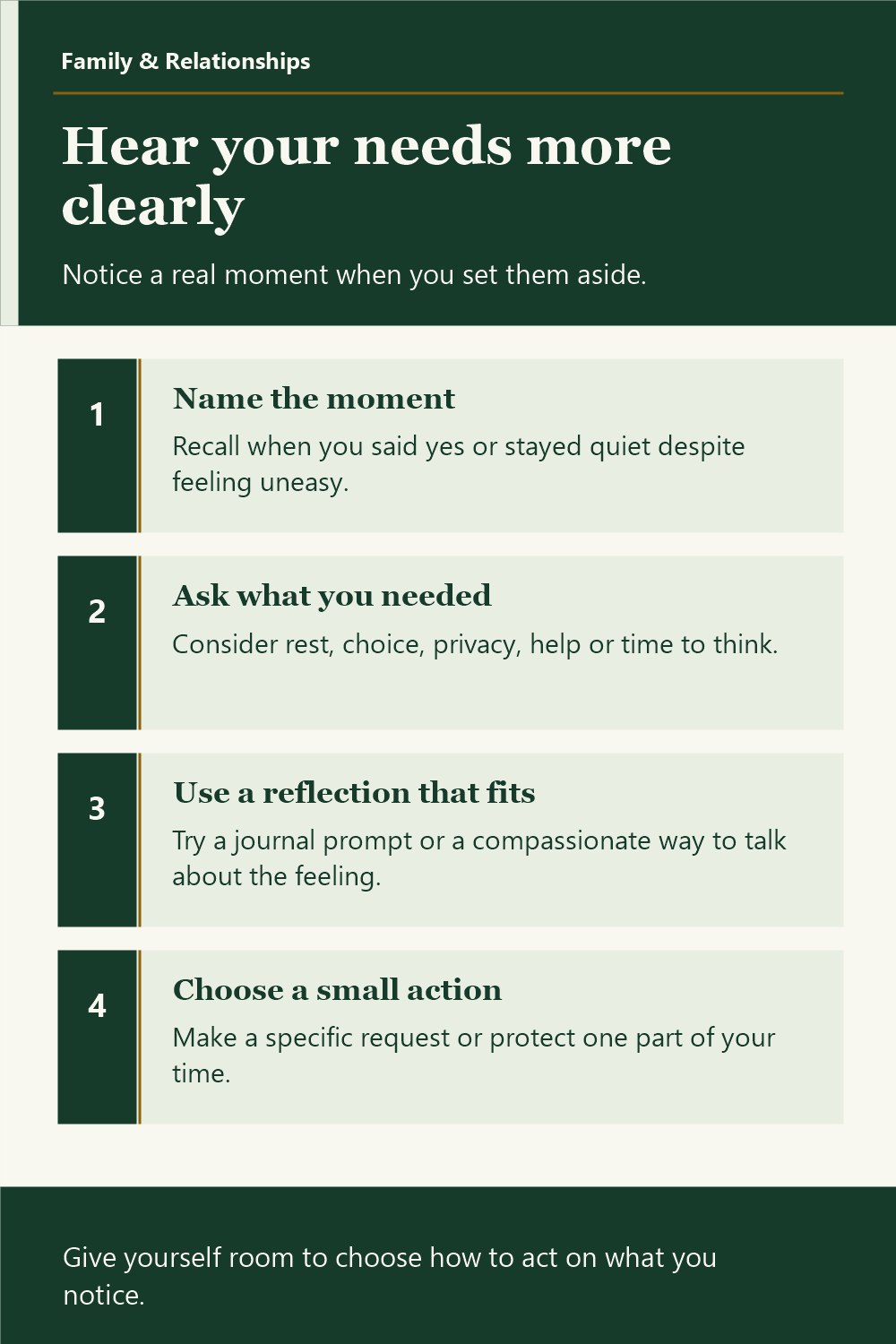
Read the infographic in text
Hear your needs more clearly
Notice a real moment when you set them aside.
- Name the moment Recall when you said yes or stayed quiet despite feeling uneasy.
- Ask what you needed Consider rest, choice, privacy, help or time to think.
- Use a reflection that fits Try a journal prompt or a compassionate way to talk about the feeling.
- Choose a small action Make a specific request or protect one part of your time.
Give yourself room to choose how to act on what you notice.