

Realizing that you have hurt someone you care about can bring regret, defensiveness or uncertainty about what to say. A useful beginning is to name the behavior and consider what needs to change.
Repair depends partly on the other person’s choices, including whether they want contact or reconciliation. You can take responsibility for your actions without requiring them to reassure you, forgive you or stay.
1. Stop the hurtful behavior before explaining it
If you are insulting someone, repeatedly messaging after they ask for space or raising the intensity of an argument, stop that action. A meaningful apology needs to be accompanied by a change in what you are doing now.
Respect the other person’s request to pause or leave. Do not block an exit, follow them to continue the argument or use another account to get around a contact boundary.
Threats, intimidation and forced contact require serious attention. These behaviors should not be treated as an ordinary communication problem that the other person must help you solve.
2. Name your action and its effect plainly
Be specific: “I called you a hurtful name during our argument. That was disrespectful, and I am sorry.” This gives the other person more to respond to than a vague apology for everything.
Avoid making the apology depend on whether they were hurt, or turning it into an explanation of what they did wrong first. You can discuss another concern separately when both people are willing.
It can be useful to notice what was happening before the argument. That reflection can inform a plan, while responsibility for your choices remains with you.
3. Listen and respect the other person’s limits
If they want to tell you how the interaction affected them, listen without immediately correcting their account or asking them to comfort you. You can ask a question when you need to understand something.
They may want time, a different way of communicating or no further contact. You can acknowledge that a limit is difficult for you while still respecting it.
An apology does not create a deadline for forgiveness. Let the other person decide whether and how they want to continue the relationship.
4. Choose a concrete replacement for the recurring action
“I will never get upset again” is not a useful plan. Choose an action you can practice, such as taking a pause before responding, discussing one issue at a time or asking before beginning a difficult conversation.
If you agree on a pause, discuss how and when you will return to the issue. Respect a refusal to continue, and avoid turning the pause into a way to demand attention.
Write the plan for yourself if that helps. The other person should not have to monitor your behavior or remind you of every commitment.
5. Follow through in daily life
Notice whether your actions are changing, including when you are disappointed or do not get the answer you wanted. Consistency gives the other person more information than repeated promises.
Rest, creative activities, time outdoors or a chosen spiritual practice may help you make space for reflection. You do not need to be perfectly calm or full of “energy” before asking for support.
Take responsibility for a setback without treating the apology as a reset that erases the pattern. Consider what additional help or change is needed.
6. Seek help when harm or control keeps recurring
If you repeatedly threaten, intimidate, monitor or pressure a partner, seek support that addresses those behaviors directly. The National Domestic Violence Hotline’s guidance for people concerned about hurting a partner can help you consider the pattern and available support.
Changing your behavior should not be conditional on the other person staying with you. They retain the right to safety, privacy and their own decisions.
If you are the person being threatened or controlled, you can seek private support without taking responsibility for changing your partner. This guide to feeling controlled in a relationship describes options for considering support.
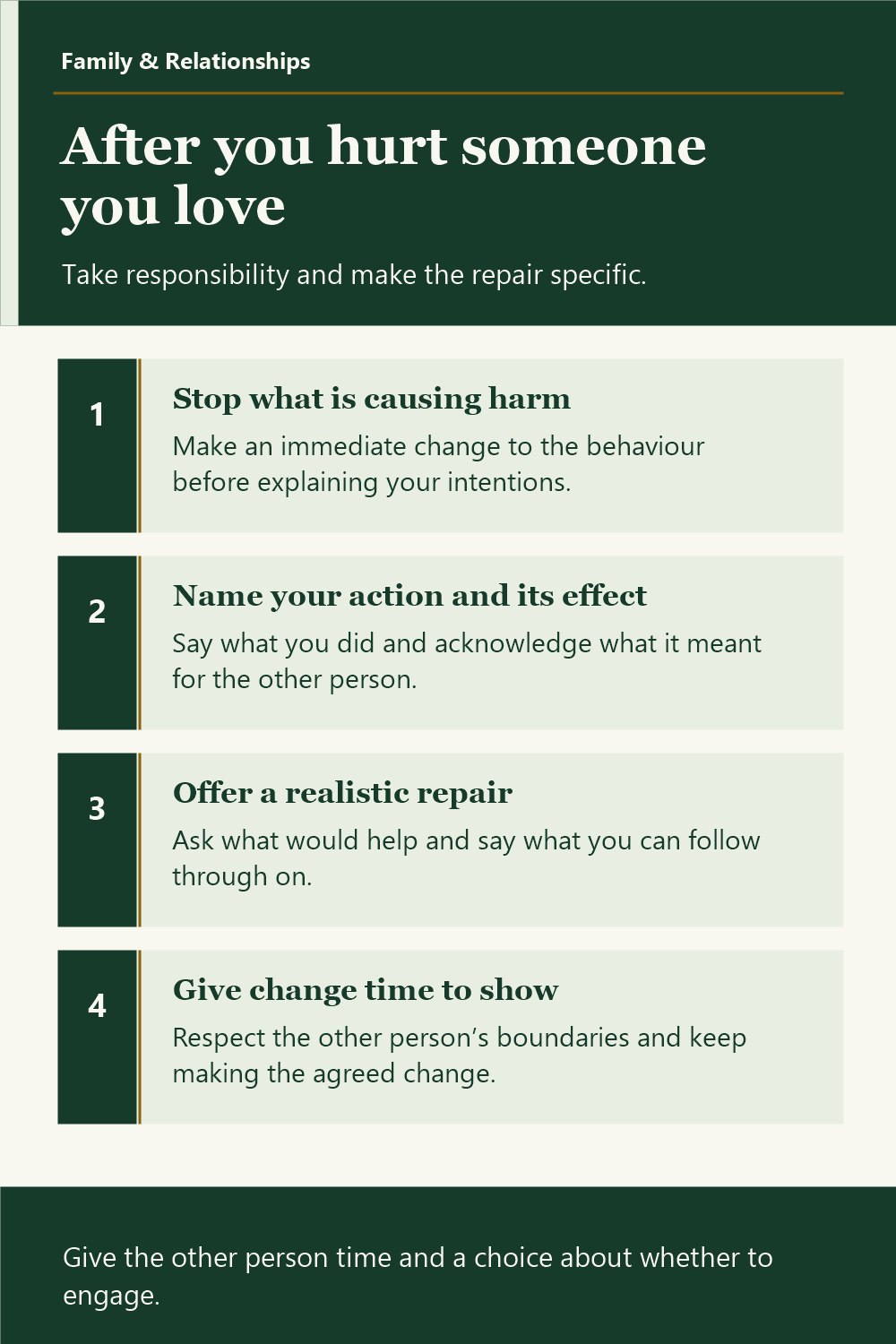
Read the infographic in text
After you hurt someone you love
Take responsibility and make the repair specific.
- Stop what is causing harm Make an immediate change to the behaviour before explaining your intentions.
- Name your action and its effect Say what you did and acknowledge what it meant for the other person.
- Offer a realistic repair Ask what would help and say what you can follow through on.
- Give change time to show Respect the other person’s boundaries and keep making the agreed change.
Give the other person time and a choice about whether to engage.