

When sadness, frustration or worry takes up much of your attention, even an ordinary task can feel difficult. You may want some relief without knowing where to start.
You do not have to force an emotion away or find a useful lesson in every painful experience. Start with a response you can manage and leave room to ask for support.
1. Name what you notice without judging yourself
You might say, “I feel upset and tired,” or “I am finding it hard to concentrate.” A simple description is enough; you do not need a perfect explanation for why you feel this way.
An emotion can be present without deciding your next action. Feeling angry does not require sending a message immediately, and feeling sad does not mean that every part of your day will feel the same.
If naming the feeling makes you more caught up in it, turn to a small practical task or someone who can help you feel less alone.
2. Choose a comfortable pause
If you can, step away briefly from an argument, a stream of messages or another demand. Notice the room around you, rest your hands somewhere comfortable or have a drink of water.
You may enjoy quiet breathing or a short meditation. Keep the practice comfortable rather than forcing deep breaths, holding your breath or expecting instant relief.
If inward attention feels difficult, keep your eyes open and focus on an ordinary object nearby. You can stop a practice that does not help you.
3. Reduce the next task to something workable
Ask, “What actually needs attention now?” You may be able to postpone an optional task, simplify a meal or complete only the first part of a chore.
Choose a small action with a clear end: put one item away, reply to one necessary message or write down tomorrow’s first task. Finishing everything is not the goal of this step.
The NHS guidance on stress suggests small, achievable targets and talking with others when you need help. Use a scale that fits your actual energy.
4. Try an activity you can comfortably choose
A short walk, some gentle movement, music or time with an interest may give your attention somewhere else to go. Choose what is accessible and appealing to you.
You do not have to take up yoga, go outdoors every day or follow a demanding routine to care for yourself. Rest or familiar company may be more useful at a particular moment.
Notice the effect without treating it as a test. If an activity does not change your mood, it may still have been a worthwhile break, and you can try something different later.
5. Ask for a specific kind of support
A request can be small: “Could you listen for a few minutes?” or “Can you help me choose what to do first?” You can also ask for company without discussing the whole situation.
Let the person know whether you want listening, practical help or ideas. They may be able to offer one kind of support more easily than another.
If a conversation leaves you feeling pressured or dismissed, consider someone else you trust or a professional source of support. You do not have to accept every piece of advice.
6. Review what is helping and seek more support if needed
After a little time, ask what made the day easier and which demands need a different plan. You may want more rest, clearer limits or help with a recurring problem.
If distress is persistent, worsening or interfering with sleep, work or everyday care, speak with a healthcare professional or counselor. You do not need to decide on a diagnosis before asking.
If you need urgent help or feel unable to keep yourself safe, contact a local crisis service or emergency service. You can seek help while still being unsure how to describe everything.
For now, choose one manageable response. Emotional care can include both small everyday steps and support from other people.
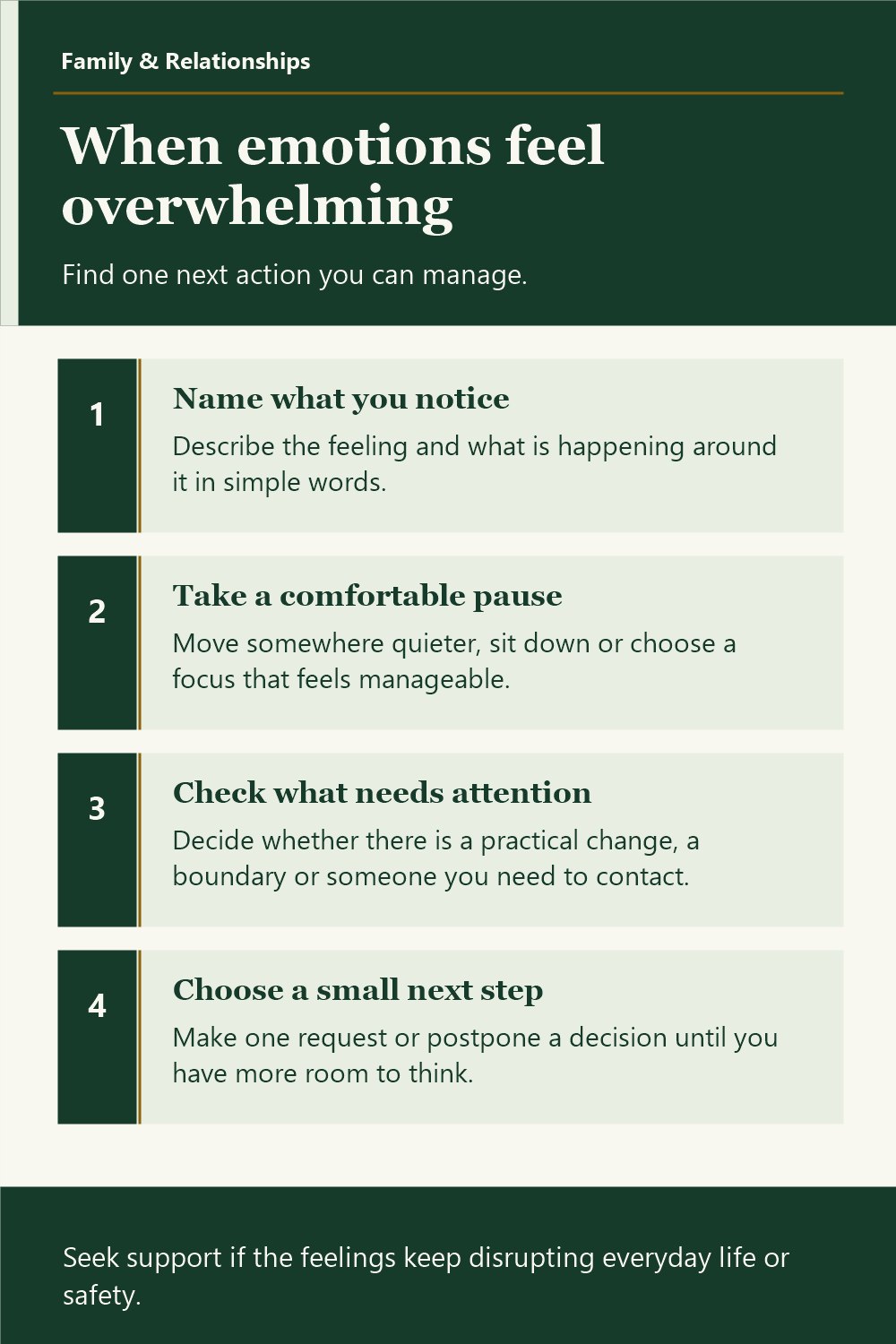
Read the infographic in text
When emotions feel overwhelming
Find one next action you can manage.
- Name what you notice Describe the feeling and what is happening around it in simple words.
- Take a comfortable pause Move somewhere quieter, sit down or choose a focus that feels manageable.
- Check what needs attention Decide whether there is a practical change, a boundary or someone you need to contact.
- Choose a small next step Make one request or postpone a decision until you have more room to think.
Seek support if the feelings keep disrupting everyday life or safety.