

Caring about a partner can involve compromise, but it should not require losing your voice or treating your needs as permanently less important. You can be kind while also being clear about what you want.
Self-respect shows up in everyday choices: saying what you think, making space for your life and deciding which arrangements you freely accept. You do not have to become perfectly confident before beginning.
1. Express your feelings and opinions clearly
Try naming a specific event and the change you want: “When our plans change at the last minute, it is difficult for me to rearrange my evening. Can we agree to give each other more notice?”
Your feelings do not need to match your partner’s before they can be discussed. You can listen to a different view without withdrawing your own or agreeing that you are unreasonable for having it.
Choose a time you can manage, and pause if the conversation becomes overwhelming. If you are afraid of someone’s reaction, consider private support rather than feeling obliged to confront them alone.
2. Keep time and relationships that belong to your own life
Being close does not mean doing everything together. You may want time with friends, a familiar activity, rest or a quiet evening by yourself.
Talk about practical arrangements where your plans affect shared responsibilities. “I would like Tuesday evenings for my class; how can we organize dinner and childcare?” is more useful than hoping the other person will guess what you need.
You do not need to present your interests as a way to become a better partner. They can matter because they are part of your life. For more reflection, consider these ideas about learning to care for yourself.
3. Distinguish shared commitments from unwanted pressure
An agreement to share expenses or household work deserves an honest conversation if your circumstances change. That is different from owing someone sex, access to private messages or unlimited availability.
State the boundary in terms you can act on: “I will not continue a conversation while I am being insulted. I can talk when we can both speak respectfully.” A boundary does not require controlling the other person’s feelings.
Check whether responsibilities are being discussed or simply assigned to you. You can ask to renegotiate a pattern that leaves you doing more than you can reasonably sustain.
A gift, a previous favor or affection does not remove your right to decline something. Consent to one thing also does not mean consent to everything that follows.
4. Choose a pause, support or an ending when you need one
Sometimes the next step is a break from a difficult conversation. Sometimes it is a firmer limit, practical help or deciding that the relationship no longer fits.
You do not need to complete a period of personal growth to be allowed to leave or ask for help. A trusted person or appropriate support service can help you think about options, especially if you feel intimidated or isolated.
If you choose to stay, notice whether discussions lead to changes you can actually see. You can value the relationship while taking a recurring problem seriously.
Start with one need you have been overlooking. Choosing how to address it is a practical expression of self-respect, even if the conversation or decision still feels difficult.
Read the infographic in text
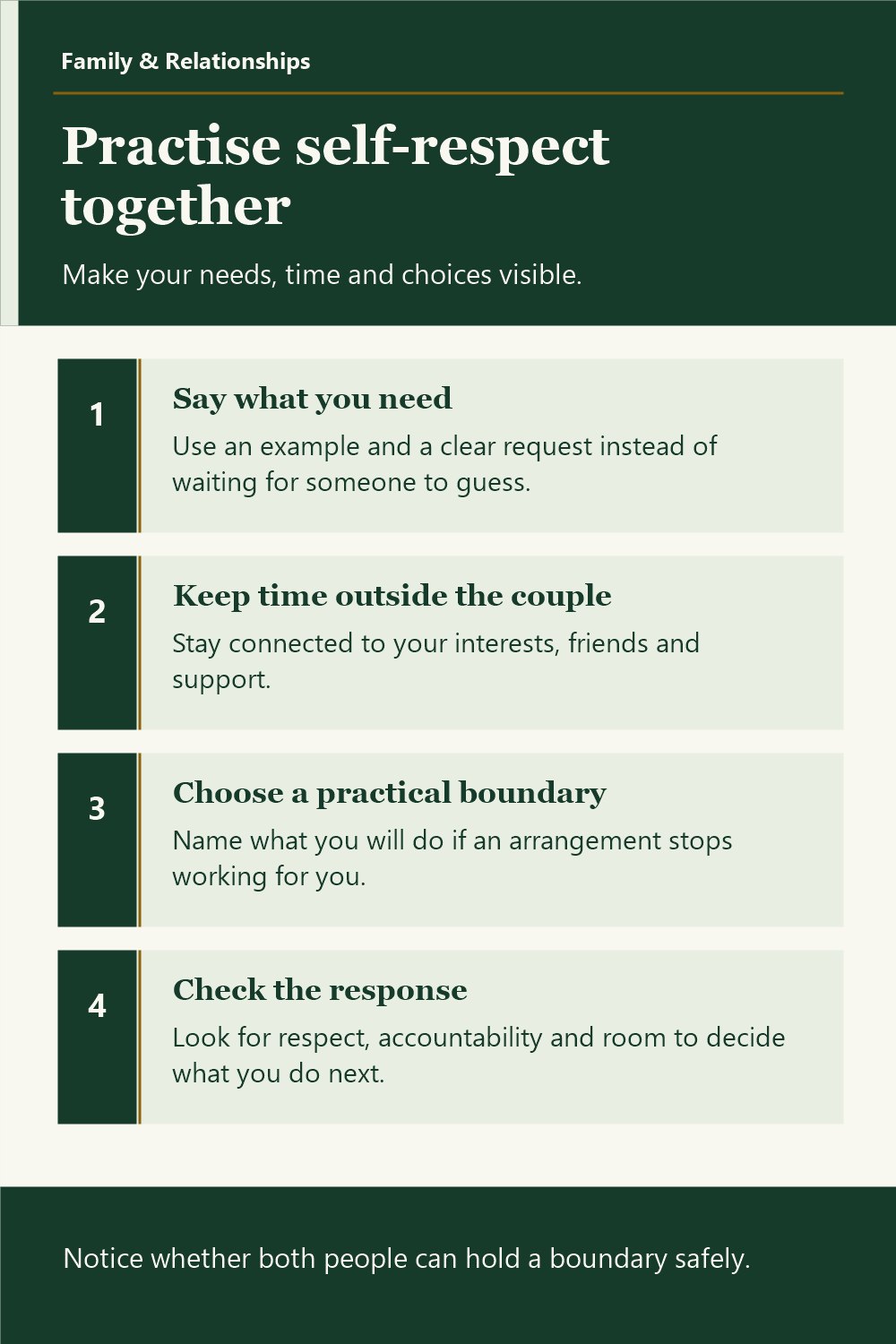
Practise self-respect together
Make your needs, time and choices visible.
- Say what you need Use an example and a clear request instead of waiting for someone to guess.
- Keep time outside the couple Stay connected to your interests, friends and support.
- Choose a practical boundary Name what you will do if an arrangement stops working for you.
- Check the response Look for respect, accountability and room to decide what you do next.
Notice whether both people can hold a boundary safely.