

Wanting a more satisfying life can be difficult when you have little energy left for it. Start with what your day actually asks of you and what support is available, rather than demanding constant enthusiasm from yourself.
If the law of attraction is meaningful to you, reflection can help you name an intention. Connect that intention with practical choices while allowing room for circumstances, other people’s decisions and your health.
1. Check what is using your energy
Look at an ordinary day: work, caregiving, travel, household tasks, interrupted sleep and difficult conversations. Include the less visible demands, such as organizing appointments or worrying about an unresolved problem.
Choose one pressure you could reduce, share or make easier. You might prepare a simpler meal, ask someone to take a specific task or postpone something optional.
Energy is not a measure of character. If your situation leaves little room to change things, the next useful step may be asking about practical support.

2. Choose a priority you can describe plainly
Turn a broad wish such as “I want a better life” into something you can consider this week: a calmer evening, more contact with a friend or progress on a postponed application.
Ask what matters about that goal. Wanting a calmer evening might reflect a need for rest, fewer arguments or a more predictable routine. Different needs suggest different actions.
Choose one priority for now. Other wishes can stay on a list without becoming promises you must fulfill immediately.
3. Make the first step small enough for today
Decide what beginning would look like with the energy you currently have. Read one part of the application, write a short message to a friend or put tomorrow’s appointment details in one place.
Give the task a clear stopping point. “Sort these three papers” may be more workable than “get my whole life organized.” You can stop at the agreed point and review another day.
Notice whether the task is too demanding. Reducing it, taking a break or asking someone to help can be a sensible adjustment.
4. Leave room for rest and enjoyable activity
Consider what is restorative for you: a quiet pause, music, a familiar hobby, time outdoors or a short conversation. Pick something accessible that does not add another complicated obligation.
You may prefer gentle activity on some days and more rest on others. Stay within your current abilities and any advice you have been given about a health condition; pushing through worsening symptoms is not the goal.
Protect a little space for enjoyment where possible. It does not have to be earned by completing every task first.
5. Connect spiritual intentions with actions you can review
If visualization, prayer, meditation or journaling helps you reflect, use it to explore what you value. You might picture asking for help calmly, then write down who you could approach and what you would ask.
Review what happened in practical terms: Did you make the call? Was the plan affordable? Did it leave you with enough time to rest? Adjust the next step using that information.
A hopeful thought cannot guarantee another person’s response, financial success or recovery from illness. Disappointment does not mean that you attracted harm or failed to think positively enough.
6. Take ongoing tiredness seriously
Persistent tiredness can have several causes, including sleep problems, stress, medicines and medical conditions. The NHS recommends seeking medical advice about fatigue that lasts a few weeks without a clear explanation or affects daily life, especially alongside other symptoms.
A clinician can help assess what is happening rather than assuming it is a motivation problem. Avoid changing prescribed treatment or spending money on an energy remedy based only on a promise.
For today, choose one realistic action and decide when to review it. Progress may involve getting help, reducing a demand or resting, as well as completing a task.
Use one priority and one deliberate pause
Suppose you have energy for one errand. If a prescription is nearly out, arrange the refill before choosing whether to collect other things. Try removing one task from the plan outright, or ask someone to take it off your list.
If tiredness persists, record when it happens and what it affects so you can explain it to a healthcare professional. The NHS guide to ongoing tiredness describes common steps and when to seek advice.
Read the infographic in text
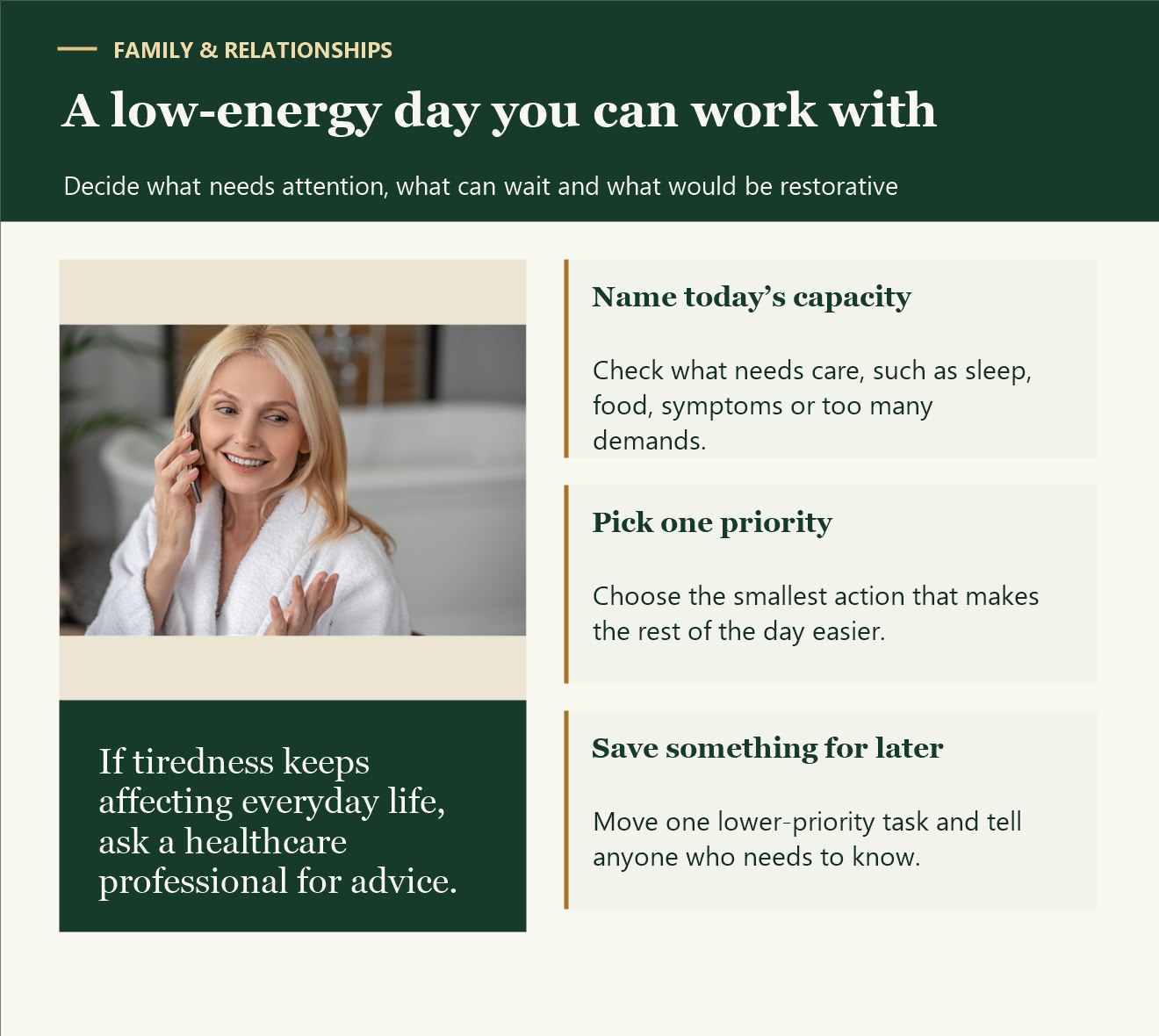
A low-energy day you can work with
Decide what needs attention, what can wait and what would be restorative
- Name today’s capacity Check what needs care, such as sleep, food, symptoms or too many demands.
- Pick one priority Choose the smallest action that makes the rest of the day easier.
- Save something for later Move one lower-priority task and tell anyone who needs to know.
If tiredness keeps affecting everyday life, ask a healthcare professional for advice.