

Taking a step back can give you room to reconsider a plan, relationship or responsibility that feels overwhelming. It does not have to mean giving up. The aim is to pause deliberately, cover what cannot wait and choose a realistic next step.
A pause is most useful when you know what you are pausing and how you will review it. You can reduce one demand without deciding your entire future today.
On this page
1. Name what you need a break from
“Everything is going wrong” is hard to act on. A more specific description might be: “I’m applying for jobs every evening and sleeping too little,” or “We repeat the same argument whenever we discuss money.”
Separate the immediate pressure from the bigger decision. You might need an evening off from applications while still wanting that career. You might need a calmer conversation while still being unsure about the relationship.
2. Decide what the pause includes
A useful pause has a practical shape. Choose what you will stop, what still needs attention and when you will check in with yourself. Keep essentials such as caring responsibilities, bills and important deadlines in view.
If another person is affected, explain what is possible: “I’m too upset to discuss this well tonight. Can we return to it tomorrow after dinner?” A pause should not become unexplained disappearance or a way to punish someone.
3. Separate facts, feelings and predictions
Write three short lines. What happened? What do you feel? What are you predicting? For example: “I did not get this job. I feel discouraged. I’m predicting that nobody will hire me.” The prediction is not the same as the event.
Feelings can point to needs worth exploring, but they do not settle every practical question. Check your assumptions against available information, costs, responsibilities and advice from someone with relevant knowledge.
4. Choose one manageable adjustment
Instead of solving your whole future, choose a next action small enough to attempt. Ask for feedback on one application, cancel one optional commitment or make a list of questions before a difficult conversation.
Make the action observable: “I’ll spend twenty minutes reviewing this application tomorrow” is easier to assess than “I’ll get my life together.” Change the size of the task if your time or energy is limited.
5. Ask for support without dismissing people
It is reasonable to limit demands when you are stretched. You can say, “I can listen for ten minutes, but I cannot take on this task.” You do not need to label someone needy to explain your capacity.
Be specific when you ask for help too: a lift, an hour of childcare, a second opinion or company on a walk. The other person can say what they are able to offer. For family situations, see Family Boundaries: How to Set Limits Without Cutting Ties.
6. Review what changed
At the end of the pause, ask whether you have more information, a little more capacity or a clearer next step. Rest may help you think, but it does not guarantee that an opportunity will appear or a relationship will improve.
Choose whether to resume, modify the plan, take more time or leave an unsuitable goal behind. A course that no longer fits is not automatically a failure; staying is not automatically perseverance.
If the same relationship keeps restarting without the problems changing, our guide to On and Off Again Relationships may help you examine the pattern.
A short plan for today
- Write down the one issue you are pausing.
- Choose one essential responsibility you will keep covered.
- Tell anyone affected what to expect.
- Set a realistic time to review your next step.
You do not have to turn every setback into a lesson or find an immediate bright side. If distress keeps making ordinary daily tasks difficult, consider asking a qualified health professional for support rather than carrying it alone.
Read the infographic in text
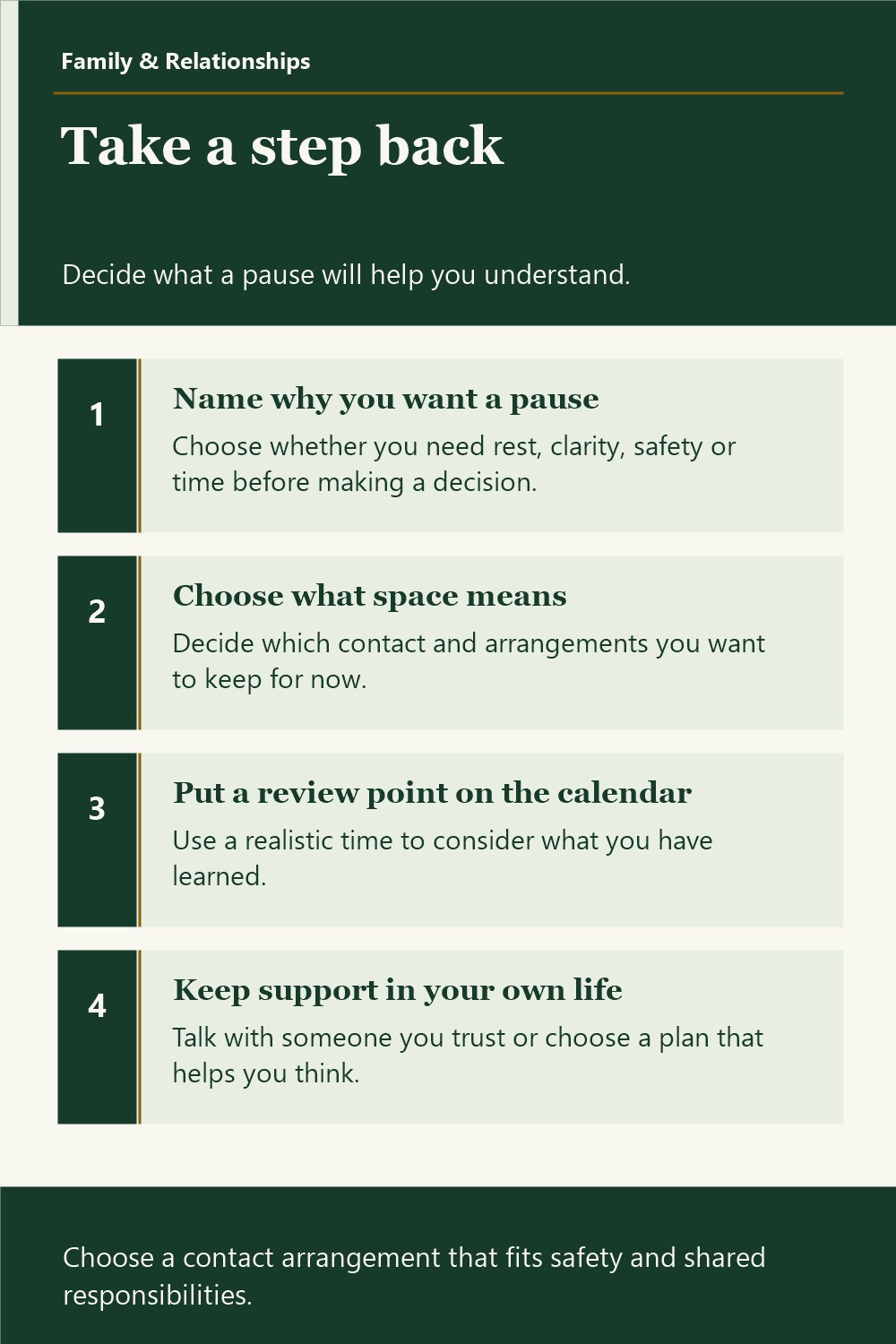
Take a step back
Decide what a pause will help you understand.
- Name why you want a pause Choose whether you need rest, clarity, safety or time before making a decision.
- Choose what space means Decide which contact and arrangements you want to keep for now.
- Put a review point on the calendar Use a realistic time to consider what you have learned.
- Keep support in your own life Talk with someone you trust or choose a plan that helps you think.
Choose a contact arrangement that fits safety and shared responsibilities.