

Changes in your beliefs, priorities or sense of yourself can affect a relationship. You might want more independence, a different routine, a new spiritual practice or a conversation about the future. Those wishes deserve attention without requiring an immediate decision about staying together.
If “enlightenment” or spiritual growth describes your experience, you can value that meaning while considering what has changed in daily life. A belief about energy or destiny cannot establish what your partner feels or guarantee what happens next.
On this page
1. Name what has changed
Start with the particular wish. Perhaps you want an evening for a class, more say in household decisions or time to explore a belief privately. “I am changing” may be true, but a concrete example helps another person understand what you are asking for.
Separate a personal preference from a rule you want to impose. You can choose a meditation practice without requiring your partner to participate. They can respect its importance to you while having different beliefs.
Avoid treating one person as more evolved or assigning a lower value to their feelings. The useful question is whether your choices can coexist with respect, fair responsibilities and room for both people.
2. Understand each person’s wishes
Where it is safe to discuss the relationship, ask about the practical change: “I would like one evening a week for this group. How could we arrange the responsibilities?” Listen to the answer without assuming that hesitation means your partner opposes your growth.
Some concerns may be about money, childcare or time together. Others may reflect a significant difference in what you each want. A conversation can clarify that difference without creating an obligation to agree.
You can ask for support without demanding unlimited approval. Your partner can describe a limit, and you can decide whether the relationship still fits. Neither person has to promise an identity or future they do not want.
3. Give reflection a practical place
Time alone, a conversation with a trusted person or writing down your thoughts may help you consider the choice. You do not need to isolate yourself, become perfectly calm or reach a spiritual milestone before making a practical decision.
Notice what you know and what you are interpreting. “We disagree about moving” identifies a difference. “The universe has confirmed that they cannot grow with me” is a meaning you have given the situation, not information about their intentions.
If you choose some space, discuss what it means where possible: contact, household arrangements and whether you will revisit the conversation. Do not assume that a pause creates agreement to date other people or guarantees a reunion.
4. Consider children and shared responsibilities
There is no universal answer about staying or separating when children are involved. Consider safety, everyday care, housing and the arrangements relevant to your family. A spiritual interpretation should not replace that practical attention.
Keep adult decisions with adults. Children do not need to choose a side, carry messages or decide whether a parent’s wish is right. Share information appropriate to their age and what is actually known, without promising a particular outcome.
Make room for their questions and feelings without requiring them to approve the decision or comfort you. The NHS has guidance on talking with children about feelings. A trusted adult outside the immediate disagreement may also offer support.
5. Choose with the information available
You might try a specific agreement, take more time, seek individual support or end the relationship. If threats, violence or control are involved, put safety and private support ahead of a joint conversation. You do not need your partner to accept your beliefs before seeking help.
An ending can bring grief, relief or uncertainty; it does not guarantee a better partner or prove that the earlier relationship was meaningless. Equally, staying does not mean giving up your growth. Consider what each person is willing to do now and whether that arrangement leaves you room to live with care and choice.
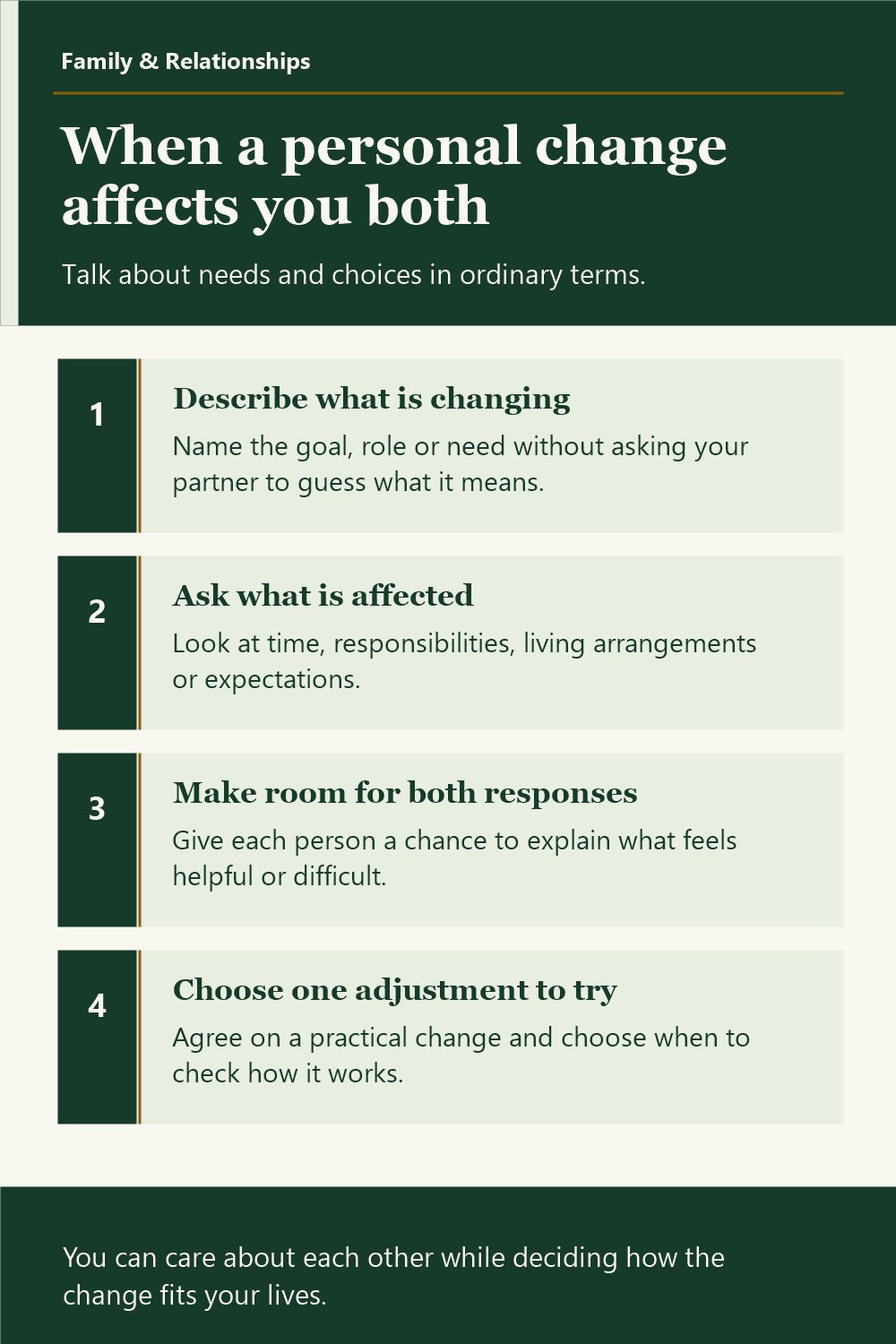
Read the infographic in text
When a personal change affects you both
Talk about needs and choices in ordinary terms.
- Describe what is changing Name the goal, role or need without asking your partner to guess what it means.
- Ask what is affected Look at time, responsibilities, living arrangements or expectations.
- Make room for both responses Give each person a chance to explain what feels helpful or difficult.
- Choose one adjustment to try Agree on a practical change and choose when to check how it works.
You can care about each other while deciding how the change fits your lives.