

Wanting love after disappointment can bring both hope and worry. You may miss your ex, feel discouraged by dating or want companionship without feeling ready for a new relationship. None of those experiences requires you to force a positive outlook or start dating before you want to.
Hope can mean allowing room for possibilities while caring for the life you have now. It does not require certainty about when a partner will appear, and your worth is not measured by your relationship status.
On this page
Give yourself room beyond a timeline
Pressure can come from family questions, friends pairing up or plans you expected to have reached by now. Notice which wishes are yours and which expectations you feel obliged to meet. You can want a relationship without treating every month of being single as a failure.
Practical concerns may still matter. Parenting, caring duties, disability, location or future family plans can affect your choices. Consider what information or support would help, rather than expecting a reassuring slogan to remove real constraints.
If dating is leaving you exhausted, a pause is an available choice. It can be a chance to rest or reconsider your approach, with no requirement to emerge completely healed or certain about the future.
Reflect without taking all the blame
A past relationship may include choices you want to handle differently. Focus on a behaviour you can understand: avoiding an important question, agreeing to something you did not want or responding harshly during an argument. Reflection can help you make a different choice without condemning yourself.
Do not assume that both people were equally responsible for a breakup or for harmful behaviour. Another person’s threats, dishonesty or coercion were their actions. You can recognise what happened and seek support without being told to stop seeing yourself as a victim.
If you keep comparing everyone with an ex, ask what the comparison is about. You may miss familiarity, a particular quality or an imagined future. That does not mean a new person must be better in every way, or that you should return to a relationship that did not meet your needs.
Define the relationship you would welcome
Think about how you want a relationship to function. You may value dependable contact, room for faith, shared parenting expectations or time for your own interests. Translate a broad wish such as “someone caring” into behaviour you can recognise and discuss.
Separate important needs from preferences you could approach flexibly. Different interests do not automatically prevent closeness. Differences about consent, commitment, having children or major responsibilities deserve clear conversation rather than an assumption that affection will resolve them.
You can communicate a need without expecting a stranger to promise your entire future. Early dating may simply establish whether you enjoy each other’s company and want another meeting. Allow understanding to develop through words and behaviour over time.
Choose a manageable way to meet people
Consider an approach that fits your energy, access and interests. That might be a social activity, an introduction you welcome or a dating app used within a time limit. You do not have to try every option at once or turn every hobby into a search for a partner.
Make early plans you can choose freely. Keep your own way to leave, share only information you are comfortable sharing and decline pressure to spend money or become intimate. Interest does not create an obligation to continue.
If you are a parent, you can keep early dating separate from your children’s lives while you get to know someone. Think about their routines and privacy before making introductions. Children do not need to provide reassurance about your prospects or manage your dating disappointments.
A disappointing date can tell you that the match was unsuitable without predicting your whole future. You can decide whether you want to try again, change your approach or take a break.
Keep a meaningful life around dating
Give attention to relationships and activities that matter now: friendship, family contact you welcome, work, rest, creativity or community. These parts of life do not have to wait for a romantic partner. You also do not have to enjoy being alone all the time to be ready for love.
Ask for support that fits the situation. A friend might listen after a difficult date, help with childcare or join you for an activity that has nothing to do with romance. You can say when unsolicited advice or questions about your love life are unhelpful.
If hopelessness or distress is affecting daily care, sleep or work, consider appropriate professional support. Wanting help does not mean you have failed to be positive enough.
Choose a next step that respects your present needs. Hope can include curiosity about the future, while leaving you free to care for yourself today.
Read the infographic in text
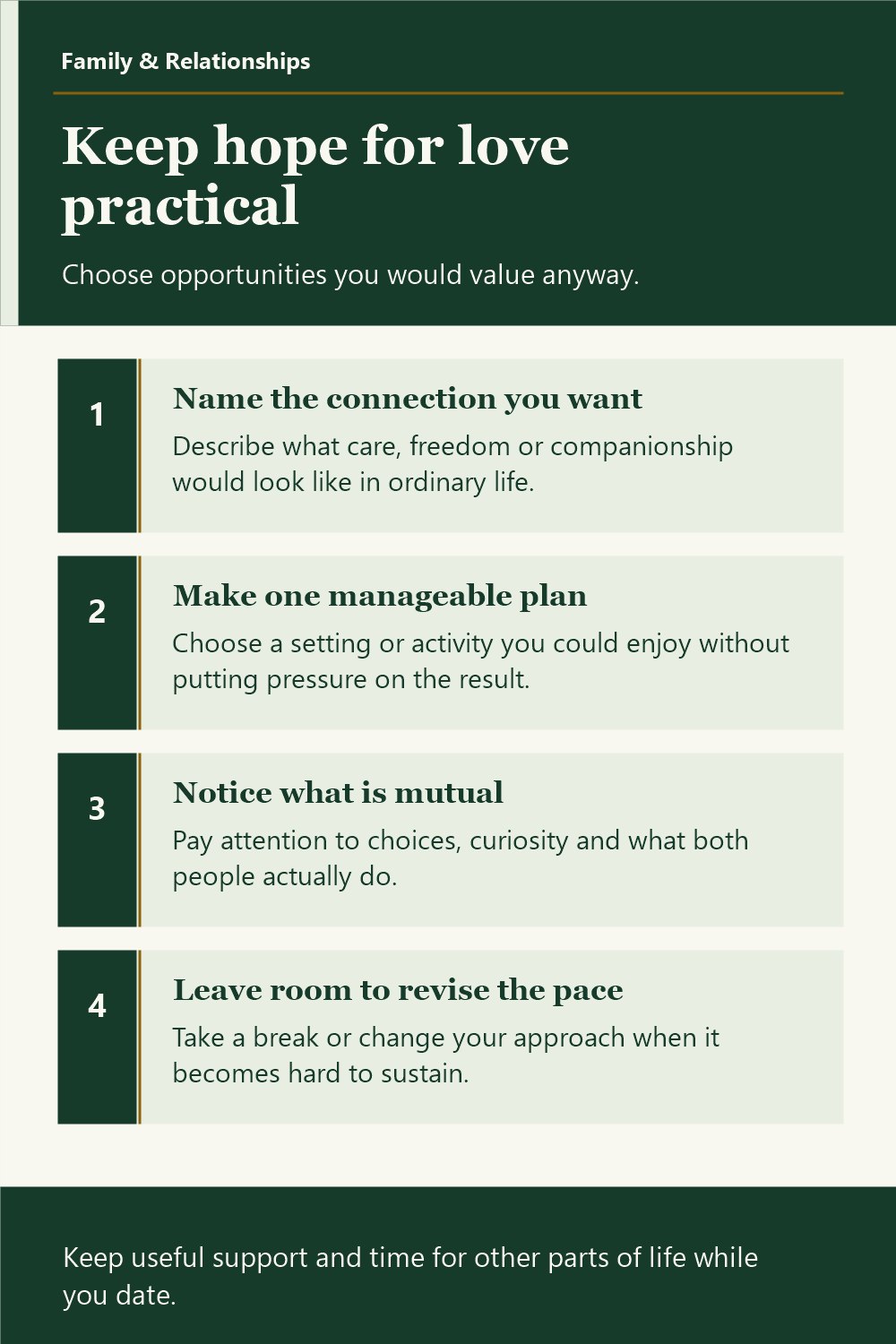
Keep hope for love practical
Choose opportunities you would value anyway.
- Name the connection you want Describe what care, freedom or companionship would look like in ordinary life.
- Make one manageable plan Choose a setting or activity you could enjoy without putting pressure on the result.
- Notice what is mutual Pay attention to choices, curiosity and what both people actually do.
- Leave room to revise the pace Take a break or change your approach when it becomes hard to sustain.
Keep useful support and time for other parts of life while you date.