

A peaceful relationship still has disagreements, awkward moments and competing needs. What matters is whether you can raise a concern, hear each other and make arrangements that both people can live with.
You do not have to resolve every insecurity or become perfectly self-sufficient before you deserve care. Start with an everyday pattern you would like to change, then look for a manageable action rather than a complete transformation.
1. Notice your needs without making them a personal failing
Before beginning a difficult conversation, ask what you are actually missing. It might be rest, help with a task, more notice about plans, affection or an evening without interruptions. A specific need is easier to discuss than a general feeling that everything is wrong.
Try separating what happened from the meaning you first gave it. “We have had very little time together this week” describes a pattern. “You do not care about me” makes a conclusion about the other person’s feelings that you may need to explore.
Your own routines, friendships and sources of support can give you more room to think. They do not excuse a partner’s hurtful behavior, and you do not have to fix yourself before asking for a fairer arrangement.
If several needs feel urgent, choose one to begin with. Writing a short note for yourself can help you keep the conversation focused.
2. Discuss a specific problem and listen for the other view
Choose a time when neither person is rushing, if that is possible. Describe one recent example and say what you would like to happen differently: “When dinner is left entirely to me, I feel overloaded. Can we decide who will cook on each evening?”
Ask how the situation looks to your partner. Listening does not mean abandoning your concern or accepting every explanation. It gives you more information about whether the problem is a misunderstanding, a practical obstacle or a recurring choice.
Keep old disagreements separate unless they are necessary to explain the current pattern. If the discussion becomes too heated, suggest a pause and a time to return to it. A pause is more useful when both people know the issue has not simply disappeared.
You can be honest without giving someone unlimited access to you. If you fear intimidation or retaliation, seek private support and consider your options before confronting them.
3. Make a small agreement you can both recognize
“We should communicate better” is difficult to put into practice. “We will message if we expect to be more than half an hour late” is something both people can understand and review.
Check that the agreement is voluntary and workable. Discuss who will do what, what happens if plans change and when you will revisit it. A promise that requires one person to be constantly available is unlikely to make daily life calmer.
Notice follow-through as well as good intentions. If an arrangement repeatedly fails, ask what needs to change rather than making the same promise more emphatically. You may need a smaller commitment, a different division of work or a firmer boundary.
Appreciating a useful effort can help make progress visible. Appreciation does not require overlooking an unresolved problem.
4. Leave room for your own life and changing circumstances
Closeness can include separate interests, quiet time and different preferences. Discuss practical responsibilities when your plans affect each other, while keeping room for activities that matter to you.
Pay attention to the present without pretending that the past has no effect. A repaired misunderstanding and a pattern of repeated disrespect deserve different responses. You are allowed to remember what happened and use that information when making decisions.
Revisit expectations when work, health, money or family responsibilities change. An arrangement that once felt fair may need adjusting.
Choose one small conversation or agreement to try this week. Then consider whether it made daily life more manageable for both of you. Peace can include setting a limit or recognizing that an arrangement no longer works.
Read the infographic in text
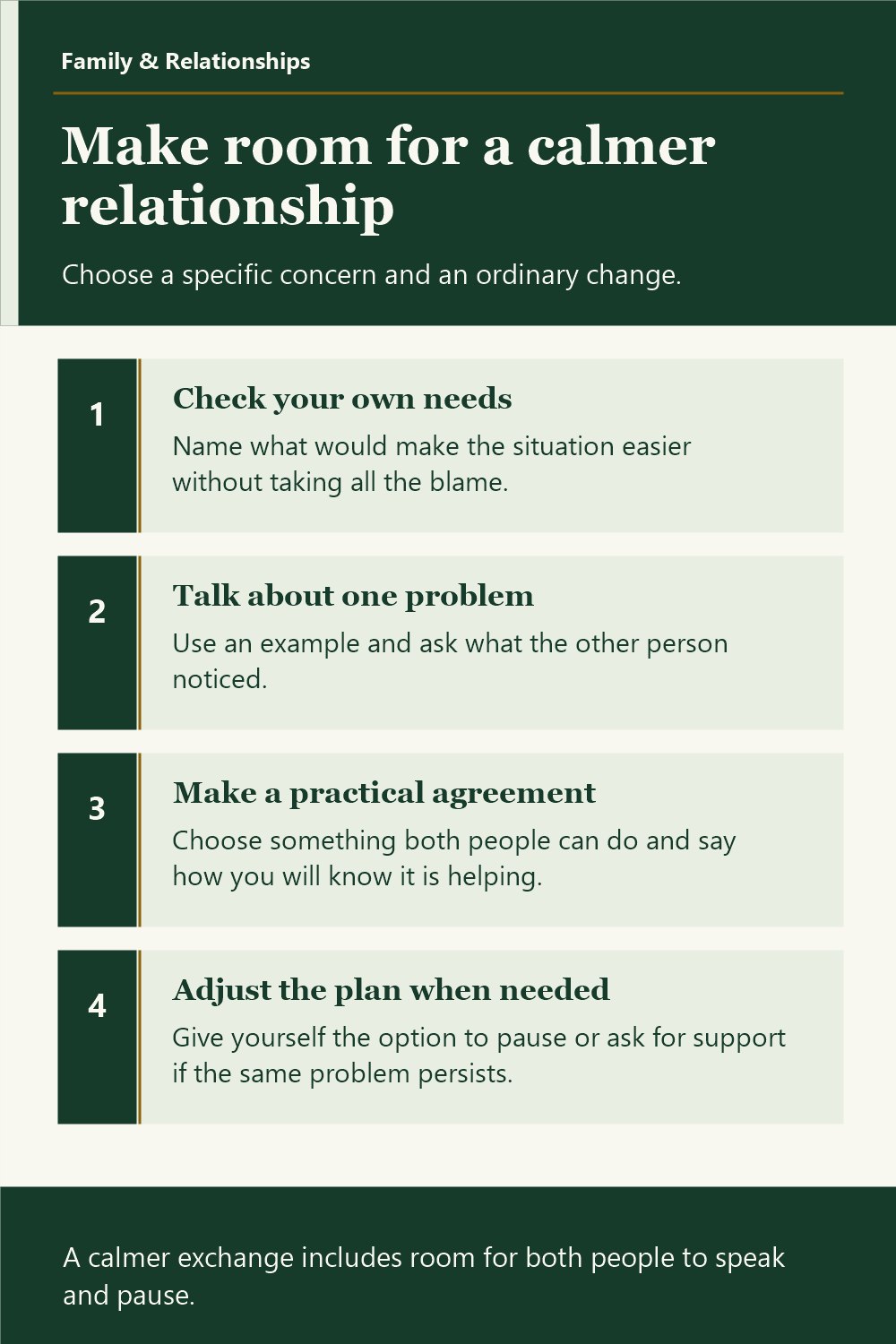
Make room for a calmer relationship
Choose a specific concern and an ordinary change.
- Check your own needs Name what would make the situation easier without taking all the blame.
- Talk about one problem Use an example and ask what the other person noticed.
- Make a practical agreement Choose something both people can do and say how you will know it is helping.
- Adjust the plan when needed Give yourself the option to pause or ask for support if the same problem persists.
A calmer exchange includes room for both people to speak and pause.