

Dustin and Jessica felt strongly drawn to each other, moved in together and got engaged. Then Dustin’s mother voiced her disapproval because Jessica was more than a decade older. The couple grew distant and argued more. They eventually separated, and each missed the other.
On this page
Start with what you know
Experience and family expectations can shape what you notice about a couple. In Dustin and Jessica’s case, the age difference became a focus for other people. The couple’s own conversations and the way they were treating each other mattered too. We can describe what happened without deciding what would have happened if everyone had reacted differently.
Ask before assuming what someone needs
If a family member’s choice surprises you, try, “What do you value about being together?” or “What’s going well for the two of you?” Give them room to answer privately. If your concern is about pressure, isolation or control, describe what you observed and offer support.
Keep relationship decisions with the people involved
If you’re the person getting unwanted advice, say what is helpful: “I’ll listen if you have a specific concern about my wellbeing. I need you to respect that I’m making this decision.” Then make time to discuss what you and your partner want directly.
Read the infographic in text
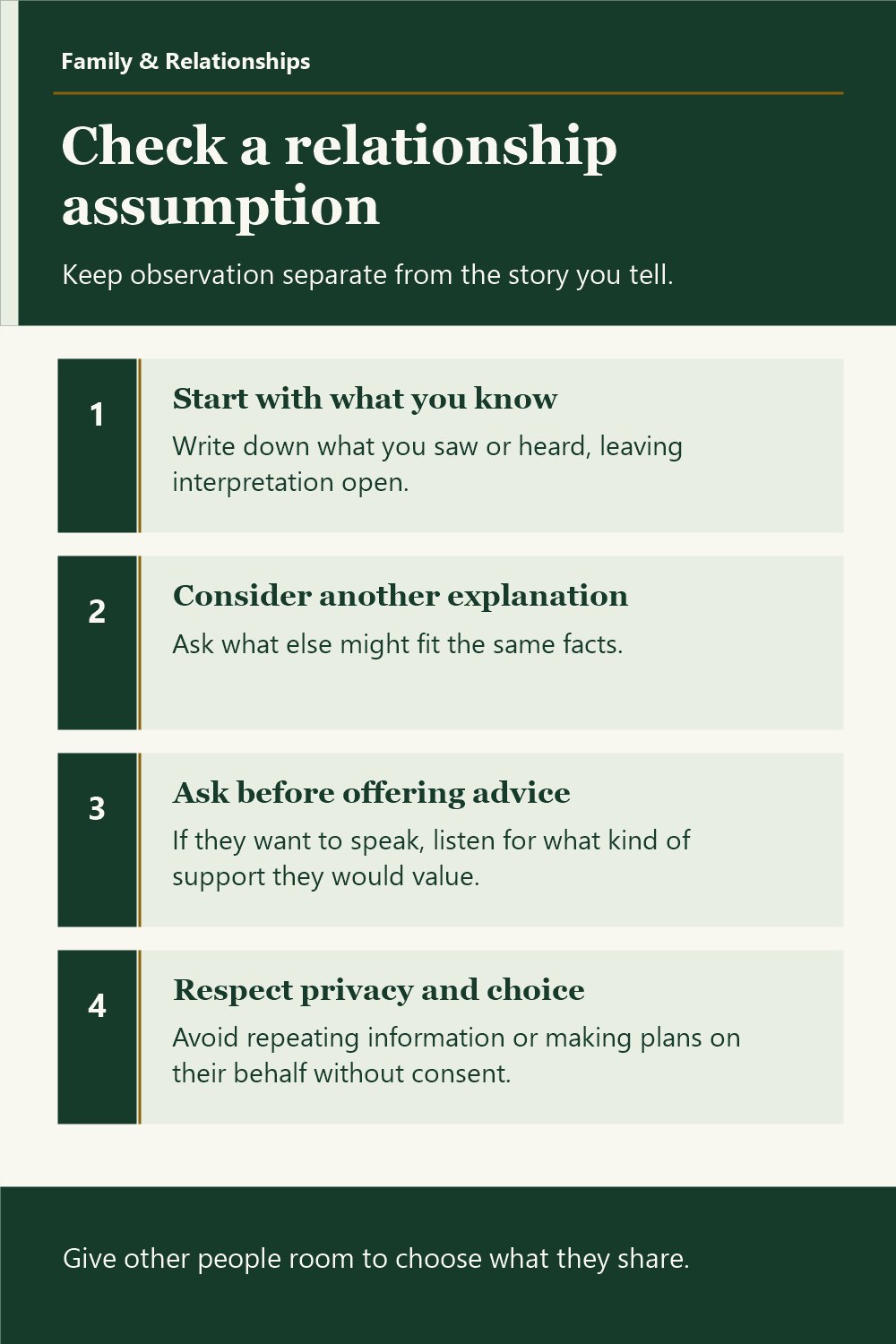
Check a relationship assumption
Keep observation separate from the story you tell.
- Start with what you know Write down what you saw or heard, leaving interpretation open.
- Consider another explanation Ask what else might fit the same facts.
- Ask before offering advice If they want to speak, listen for what kind of support they would value.
- Respect privacy and choice Avoid repeating information or making plans on their behalf without consent.
Give other people room to choose what they share.