

A meaningful relationship can include ordinary moments of attention, shared interests and conversations about what matters. You do not have to create a dramatic experience or transform your partner into a soulmate. Start with the kind of connection each of you actually wants.
People bring different beliefs, histories, needs and preferences to a relationship. There is room to be curious about those differences while respecting privacy and the right to decline an activity. Closeness can be invited; it cannot be produced on demand.
On this page
Ask what makes the relationship meaningful
Try a question with room for different answers: “When do you feel that we understand each other?” or “What would you like more space for in our relationship?” Your partner might mention conversation, reliability, affection, a shared activity or something you have not considered.
The word “soulful” may describe spiritual connection for one person and a sense of being known for another. Ask what it means rather than assuming that you share the same interpretation. Neither gender nor a relationship label determines the kind of intimacy someone wants.
If spiritual reflection or a psychic reading matters to one of you, discuss whether both want to participate and what each person prefers to keep private. Such an experience can be a prompt for personal reflection; it cannot establish what your partner feels or decide a career or relationship choice for them.
A difference in belief does not have to become a contest. Consider whether you can respect each other’s choices, including choosing a different activity or reflecting separately.
Make room for each person’s hopes and limits
Ask about something your partner would like to do, and share an interest of your own. Listen for what the goal means to them rather than immediately taking responsibility for making it happen.
Dreams can start a conversation about practical choices: time, cost, care responsibilities or a skill someone wants to learn. You can offer encouragement without promising that every dream will be fulfilled or putting your own plans permanently aside.
If the topic is a major shared decision, such as having children or moving, leave room for an honest difference. Understanding the importance of a wish does not mean you must agree to it. A clearer answer can be useful even when it is disappointing.
The NHS’s relationship guidance includes listening, checking what you understood and protecting your own capacity to help. Choose a way of talking that gives both people time to respond.
Choose shared moments that fit your lives
Suggest something you would both enjoy and can realistically manage. You might listen to music, take an accessible outing, play a game or share a quiet conversation. Ask about comfort, energy and cost before deciding.
Sharing food can be one option if it suits both of you. A familiar meal or an offer to prepare something may be welcome, but cooking or presenting food is not an obligation or a technique for making someone desire you.
You could share a short passage, poem or song that means something to you. Ask whether your partner wants to listen, read or talk about it. The experience does not need to evoke the same memory or feeling for both people.
Family stories may be interesting to explore together, while some histories are private, painful or unknown. Let each person choose what to share. You can learn about someone’s present values without requiring access to their whole family history.
Keep touch and personal sharing voluntary
Ask what kind of affection is welcome now. Cuddling, holding hands or sitting close may feel good to one person and uncomfortable to another at a particular time. Being partners does not remove the need to respect a refusal or change of mind.
You can also be close without physical contact. Listening to an account of the day, sharing an interest or making a practical task easier may be a preferred form of care. There is no minimum number of hours of touching or conversation that proves your bond.
Personal disclosure should follow the same principle. You can say, “I am not ready to talk about that,” or “I want this to stay private.” Sharing every secret is not a condition of trust, and one person’s openness does not create a debt for the other to disclose more.
Let everyday care support the connection
Notice what happens outside planned moments together. Are agreements respected? Can both people ask for help or say that a routine is not working? A meaningful activity cannot substitute for reliability, safety or taking responsibility after harm.
If an activity feels forced, change it or leave it out. You can review what each person enjoyed and try something simpler. A useful plan fits your actual lives instead of becoming another performance of an ideal relationship.
If speaking honestly brings intimidation, threats or pressure, seek private support suited to your circumstances. You do not need a deeper spiritual experience or a better romantic gesture to earn respectful treatment.
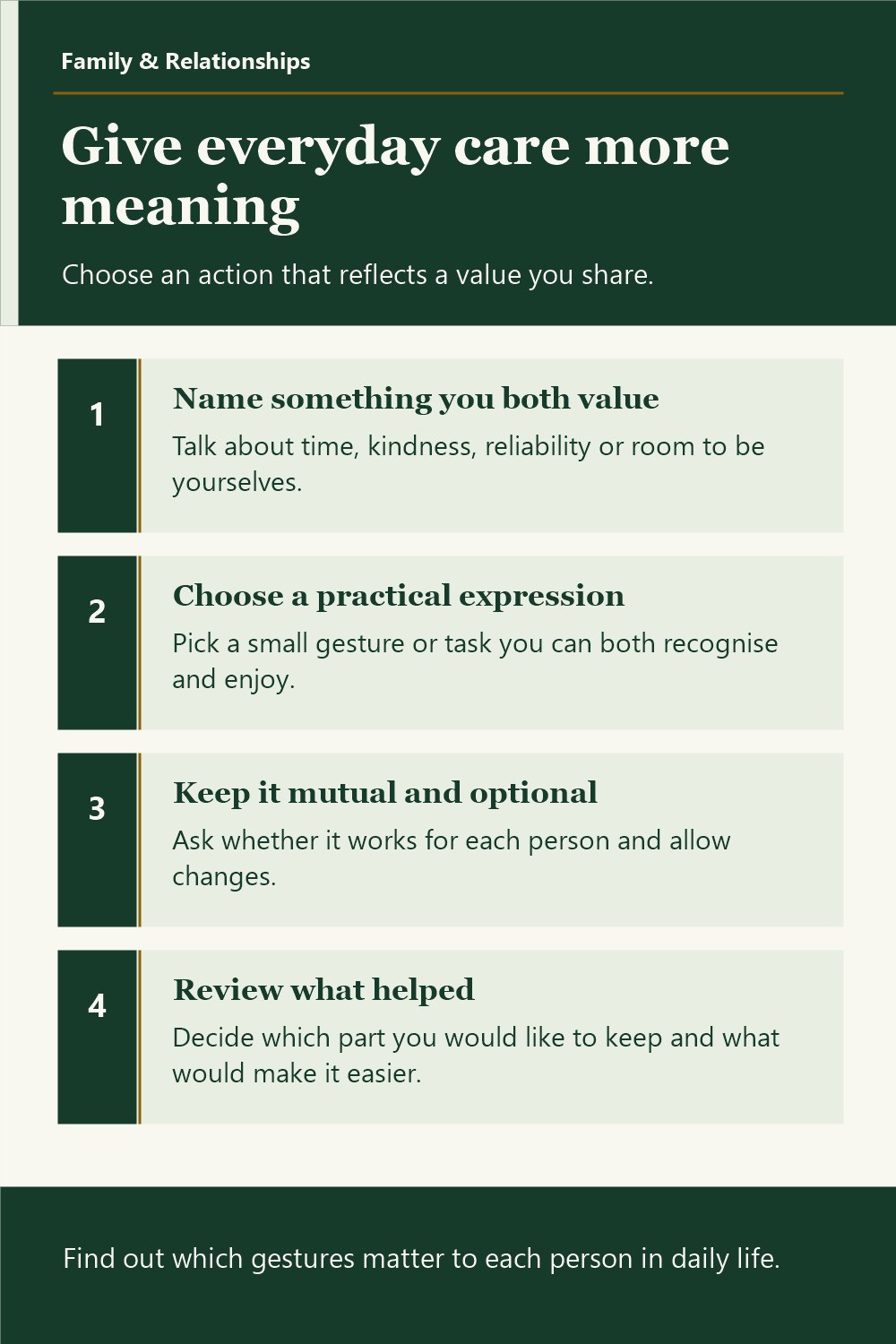
Read the infographic in text
Give everyday care more meaning
Choose an action that reflects a value you share.
- Name something you both value Talk about time, kindness, reliability or room to be yourselves.
- Choose a practical expression Pick a small gesture or task you can both recognise and enjoy.
- Keep it mutual and optional Ask whether it works for each person and allow changes.
- Review what helped Decide which part you would like to keep and what would make it easier.
Find out which gestures matter to each person in daily life.