

After disappointing dates or a long time without meeting someone, being “lucky in love” can sound like something that happens to everyone else. It is understandable to want a connection without knowing what to try next.
You cannot control when you will meet a compatible person. You can choose opportunities and limits that fit your life, while remembering that being single is not evidence that something is wrong with you.
1. Separate important needs from flexible preferences
Start with a few qualities that affect how a relationship would work: kindness, respect for your boundaries, compatible commitment goals or space for your responsibilities. Then identify preferences you could be curious about, such as hobbies or style.
You do not have to date someone who conflicts with an important value to prove that you are open-minded. The aim is to distinguish a different favorite film from a different plan for your future.
A short list is easier to use than a perfect-partner specification. Revisit it as you learn what matters to you.
2. Choose one way to meet people that you can sustain
You might try a dating app, accept an introduction or attend a group around something you already enjoy. Choose an option you would still find worthwhile even if it does not lead to a date.
Make the next step small: update a profile, ask a friend about introductions or attend one event. There is no required number of profiles to view or people to date before you are allowed to stop.
If online dating suits you, these practical steps for dating after 50 can help you plan a comfortable start. Many of the pacing and privacy questions apply at other adult ages too.
3. Give curiosity room without forcing attraction
A first conversation may feel exciting, calm, awkward or simply pleasant. None of those feelings predicts the whole relationship. Ask whether you enjoyed something about the person and would freely choose another conversation.
If you are unsure but comfortable, a second meeting may give you more information. If you do not want one, a polite decline is enough. You do not owe someone more dates to make a connection happen.
Notice everyday compatibility as well as chemistry: how you share conversation, handle a changed plan and respond to different preferences.
4. Set a pace that leaves room for your life
Dating can take time, money and attention. Decide what you can comfortably offer alongside work, family, rest and friendships. You might prefer a short daytime meeting or a limited amount of app time.
Choose a public meeting place, arrange transport you control and share only the personal information you feel comfortable sharing. You can leave or end contact if you want to.
A useful invitation is specific and easy to decline: “Would you like a coffee on Saturday afternoon?” Clear plans reduce guesswork while leaving both people a choice.
5. Look for interest that goes both ways
Notice whether both people ask questions, make plans and respect each other’s time. A delayed reply can have many explanations, so avoid treating a single message as a verdict on your attractiveness.
If the pattern is unclear, ask once about what the other person wants. If they decline, do not respond or repeatedly avoid making plans, you can step back rather than continuing to persuade them.
Disappointment is real, but one person’s choice does not tell you what everyone else will think of you.
6. Review what helps and take a break when you need one
After a few experiences, ask what felt manageable, what drained you and what you would change. You may want different meeting places, clearer profile information or fewer conversations at once.
A break can be a deliberate choice. Keep investing in friendships, interests and sources of companionship that matter to you now, rather than treating them as a waiting room for a relationship.
If you want to keep dating, choose one next step that fits your priorities. Hope can remain part of your life without a deadline or a promise that a particular method will bring love.
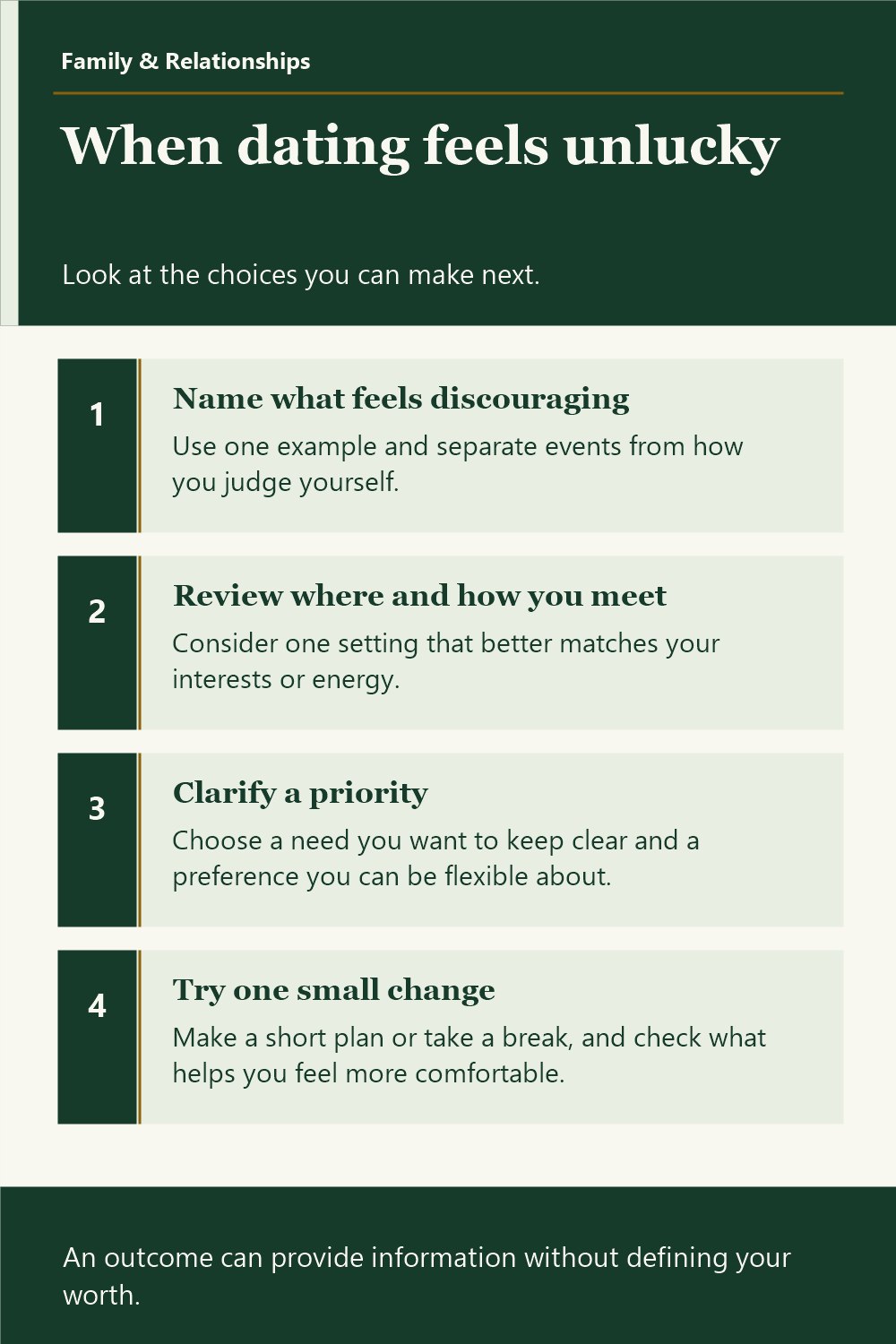
Read the infographic in text
When dating feels unlucky
Look at the choices you can make next.
- Name what feels discouraging Use one example and separate events from how you judge yourself.
- Review where and how you meet Consider one setting that better matches your interests or energy.
- Clarify a priority Choose a need you want to keep clear and a preference you can be flexible about.
- Try one small change Make a short plan or take a break, and check what helps you feel more comfortable.
An outcome can provide information without defining your worth.