

A family gathering can bring warmth, tension or a mixture of both. You may care about your relatives and still find certain questions, expectations or old disagreements difficult.
Think about what would make this particular visit manageable. You can choose a shorter stay, a different arrangement or no visit at all. You do not have to create a perfect occasion or repair every family relationship in one afternoon.
1. Choose the visit you can realistically manage
Before agreeing, consider the practical details: travel, cost, where you will stay, caregiving responsibilities and how much time you want to spend there. A plan that depends on ignoring all your own needs may be difficult to sustain.
Decide what you are offering. “We can come for lunch and leave at three” gives people clearer information than a reluctant yes to an open-ended visit. If you need your own transport or accommodation, arrange it where possible.
You can suggest another way to connect, such as a shorter meal, a walk or a call. A different arrangement can be worthwhile even if someone would prefer the original plan.
If you expect intimidation, threats or abuse, give your safety priority. Declining an invitation or seeking support may be more appropriate than preparing a better conversational strategy.
2. Prepare a few clear responses to difficult questions
Choose the subjects you want to keep private. You might be happy to discuss work while keeping your relationship, health or future plans to yourself. You do not need an elaborate explanation for every limit.
Try a brief response and a change of subject: “I’m keeping that private for now. How is your garden coming along?” Another option is, “I’d rather enjoy lunch together than discuss that today.”
Consider how you will respond if the question continues. You could repeat your limit, move to another conversation or take a break. Choose an action that is safe and within your control.
Curiosity, concern and criticism can feel different, and you may not know someone’s intention. You can acknowledge a kind intention while still declining to answer. Shared history does not require sharing every part of your current life.
3. Use breaks, perspective and humor when they help
Notice when you are becoming tired or overwhelmed. A short walk, helping with a task you enjoy or a few quiet minutes can give you space before deciding whether to continue a conversation.
Humor may make an awkward moment easier when it feels natural and kind. You do not need to laugh at a hurtful remark or make yourself the joke to keep other people comfortable.
A relative may also be dealing with stress, grief or a difficult change. Remembering that can help you decide how much energy to give a comment. Understanding someone’s circumstances does not require accepting repeated disrespect.
If you want support during the visit, agree with a trusted person beforehand about what would help. That could be checking in, changing the subject or leaving together, rather than expecting them to guess.
4. Review the visit without making yourself responsible for everyone
Afterward, allow some time for rest or an activity you enjoy. You can feel relieved, disappointed and affectionate toward the same people without having to settle on one final description of your family.
Ask what helped and what you would change next time. Perhaps a shorter stay worked well, a topic needs a firmer limit or a particular gathering is one you would prefer to skip.
If you said something you regret, you can take responsibility for that specific action. You do not have to apologize for having a limit or accept responsibility for everybody else’s reactions.
Keep room for people who offer steady care, including friends and chosen family. The next gathering can reflect what you learned about your own needs, rather than repeat an arrangement simply because it has always been that way.
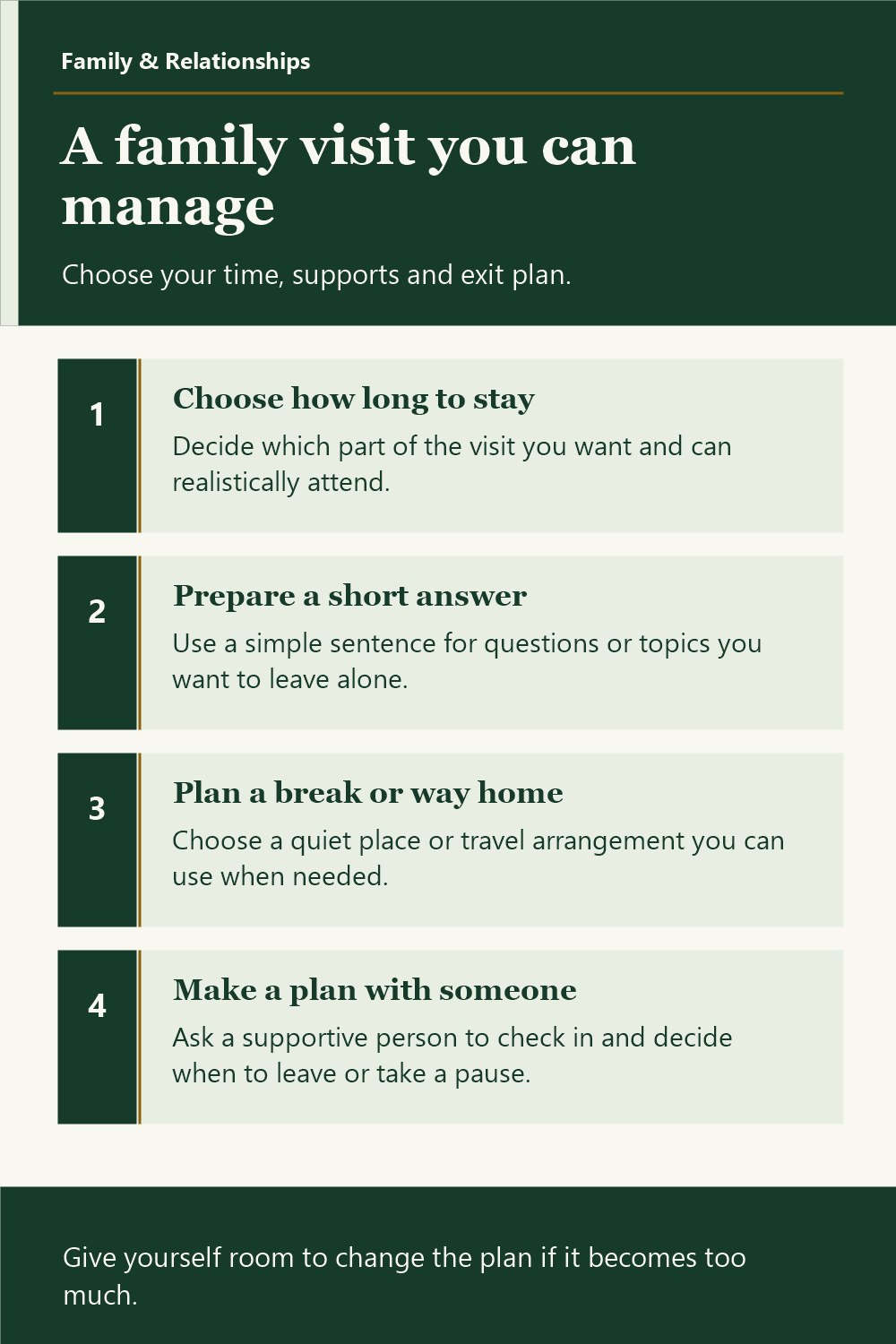
Read the infographic in text
A family visit you can manage
Choose your time, supports and exit plan.
- Choose how long to stay Decide which part of the visit you want and can realistically attend.
- Prepare a short answer Use a simple sentence for questions or topics you want to leave alone.
- Plan a break or way home Choose a quiet place or travel arrangement you can use when needed.
- Make a plan with someone Ask a supportive person to check in and decide when to leave or take a pause.
Give yourself room to change the plan if it becomes too much.