
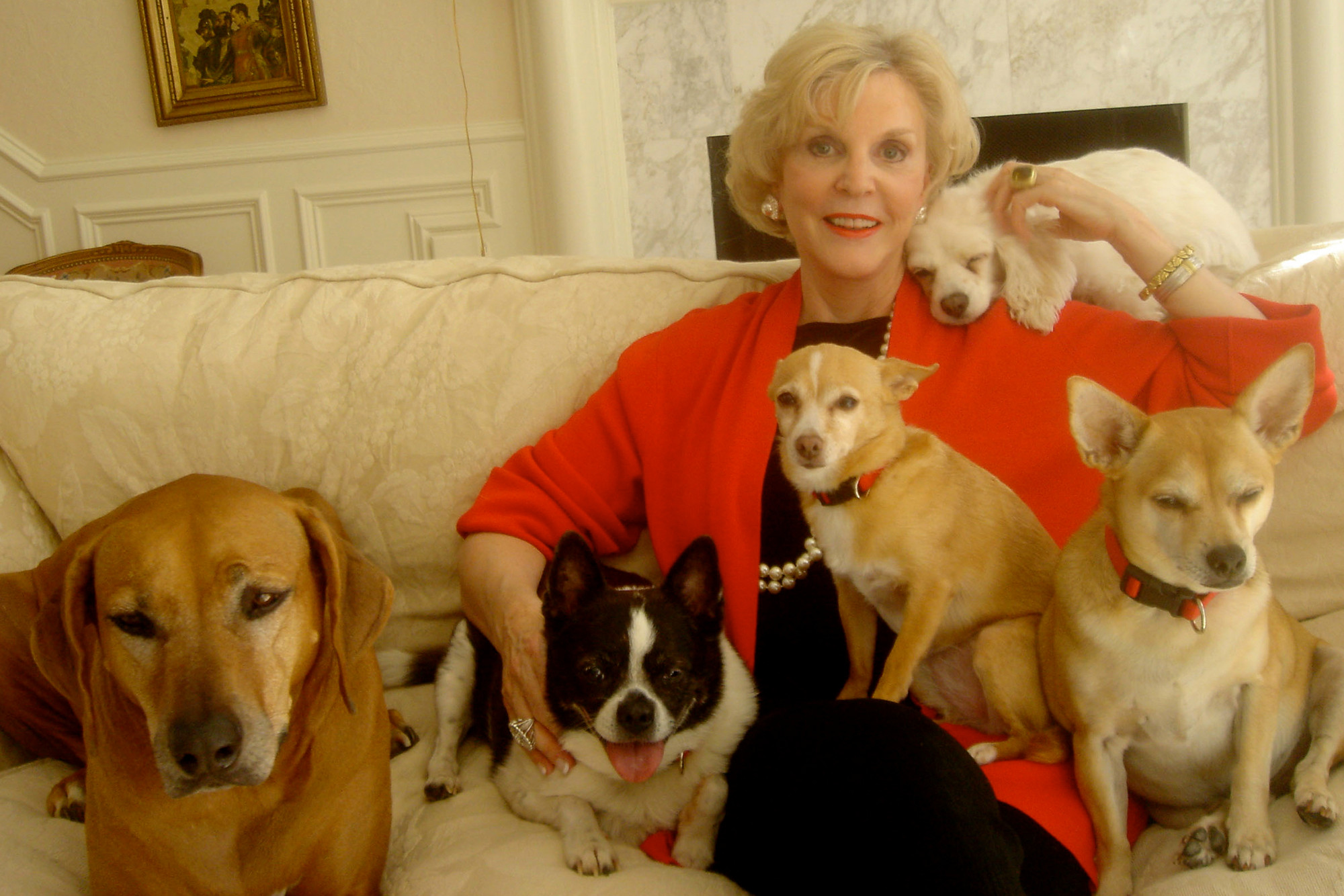
An older dog and a younger dog had lived together peacefully for years before they began fighting. Their owners tried training and later spoke with an animal communicator. Their story offers a chance to think about what families can observe, what a veterinarian can assess and how people make sense of a pet’s behavior.
On this page
What the family observed
The younger dog went to training for several weeks. The dogs did well together at a trainer’s facility, but tension returned at home. The owners noticed reactions during changes such as moving between rooms or handling a leash. They tried several approaches and later reported that things improved after they changed the dogs’ routine and spent time training them together.
Ask your veterinarian about a sudden change
If dogs start fighting, keep them apart safely and keep children away from tense situations. Contact a veterinarian to check for pain, illness or another medical cause and ask how to find a qualified behavior professional. Bring notes about what happened immediately before each incident and whether either dog was hurt. The American Veterinary Society of Animal Behavior recommends reward-based methods and has guidance on choosing a trainer.
How the family interpreted the reading
The communicator interpreted the younger dog’s behavior as stress after training away from home. The owners found that perspective meaningful and paid closer attention to routines and tension in the household. If animal communication is part of your beliefs, you can use a reading to reflect on questions to bring to the veterinarian. Discuss diet changes, supplements or changes to a treatment plan with the vet first.
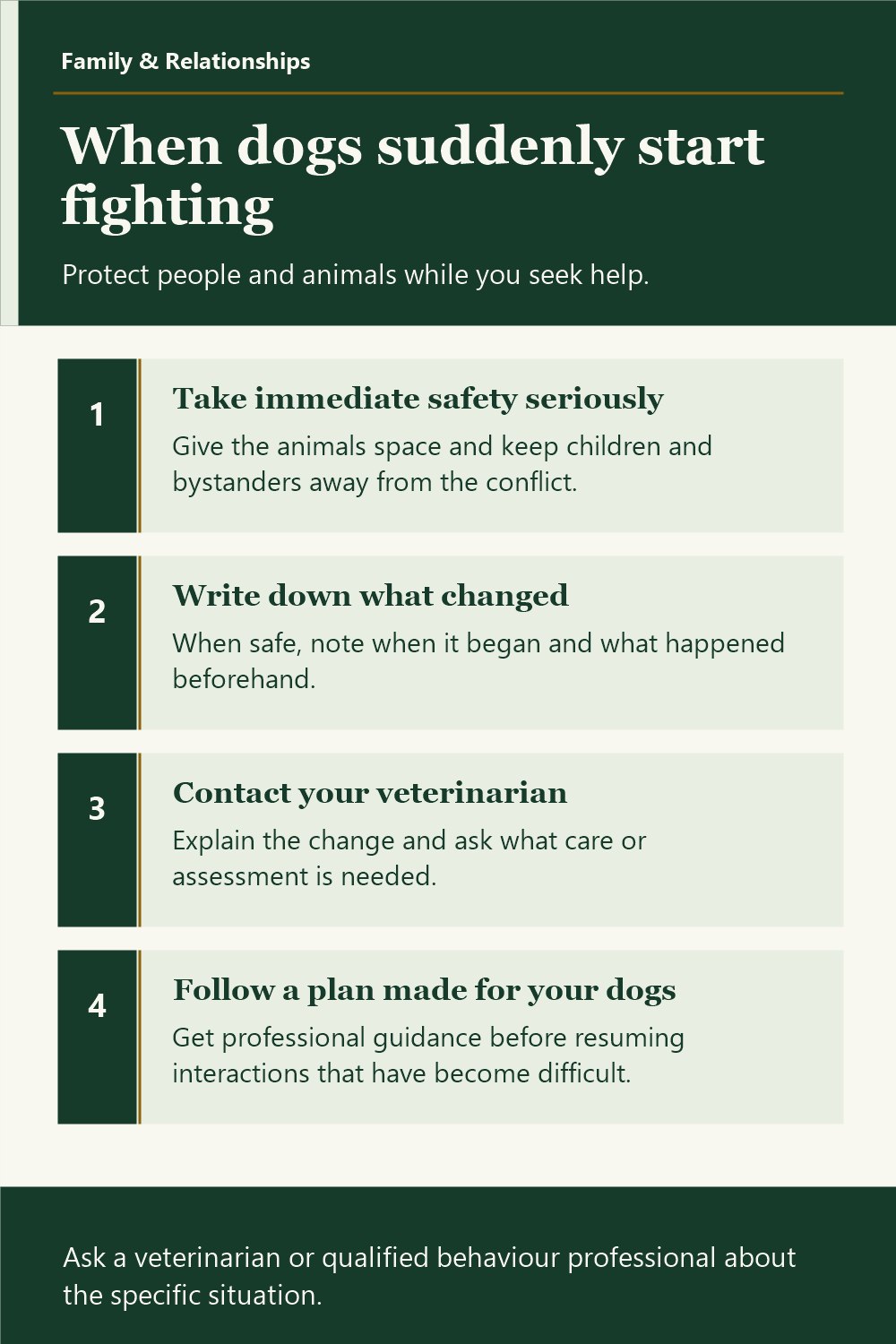
Read the infographic in text
When dogs suddenly start fighting
Protect people and animals while you seek help.
- Take immediate safety seriously Give the animals space and keep children and bystanders away from the conflict.
- Write down what changed When safe, note when it began and what happened beforehand.
- Contact your veterinarian Explain the change and ask what care or assessment is needed.
- Follow a plan made for your dogs Get professional guidance before resuming interactions that have become difficult.
Ask a veterinarian or qualified behaviour professional about the specific situation.