

If you believe in soulmates, waiting for a meaningful connection can bring hope, impatience or doubt. You may wonder whether someone is looking for the same kind of relationship that you want.
You can value that belief while making choices in the life you have now. Nobody can promise when a partner will arrive, and being single does not mean that your feelings, energy or past experiences are blocking love.
1. Describe the connection you hope to build
The word “soulmate” can carry spiritual meaning, a sense of familiarity or the wish to feel deeply understood. Ask yourself what that would look like in ordinary interactions.
Perhaps you want affection, reliability, room for your faith or someone who shares decisions fairly. Naming those qualities gives you something to discuss and notice when you meet people.
Your understanding can change with experience. You do not have to settle on a perfect definition before taking part in relationships or enjoying your life.
2. Leave room for imperfect feelings
You do not need constant confidence or happiness to deserve a caring relationship. Grief, uncertainty and previous hurt can coexist with curiosity about someone new.
Consider the pace you can manage. You might enjoy a conversation while preferring to wait before dating, or want companionship without a major commitment. Being honest about that helps the other person choose too.
If old experiences are making daily life or relationships difficult, seek support that fits your needs. Support can help you understand what you want; it is not a requirement you must complete to earn a partner.
3. Create opportunities without making promises to yourself
Choose activities you would enjoy even if you do not meet a romantic partner: a community group, volunteering, an interest-based event or time with friends. Dating services are another option if you want to use them.
Take a specific step that feels manageable, such as accepting one invitation or starting a conversation. You can review how it felt afterward instead of committing to a demanding search.
Opportunity and timing remain uncertain. An activity can bring friendship, interest or a pleasant afternoon without needing to become the beginning of a destined relationship.
4. Let a strong feeling meet everyday evidence
Immediate familiarity or attraction can be enjoyable. Give yourself time to learn how someone handles disappointment, respects a refusal and follows through on arrangements.
Discuss the kind of relationship you each want. A person can feel important to you while wanting a different level of commitment, intimacy or contact. Neither intuition nor a spiritual label answers those questions for them.
When you are unsure about the pattern, this guide to understanding love through words and actions offers another starting point. Look at what happens over time rather than searching for one decisive sign.
5. Keep your own life and choices
You do not have to abandon friendships, privacy, interests or plans to prove that you are open to love. A relationship can become part of your life without taking over every source of support.
Be cautious about interpreting pressure or hurt as a spiritual test you must endure. Someone is responsible for how they treat you, even when the connection feels unusually significant.
Ask, “Can I say no, raise a concern and make decisions freely here?” A meaningful belief can sit alongside clear limits and attention to your well-being.
6. Choose the next step that fits the actual relationship
If interest and care are mutual, continue getting acquainted at a pace you both choose. If they are not, stepping back does not mean that you failed to recognize a destined opportunity.
You may need time to grieve a connection that mattered to you. You can also find support and companionship outside romance while deciding what you want next.
Hope does not need a deadline or a guarantee. Let it encourage possibilities while leaving you free to respond to the person, circumstances and choices in front of you.
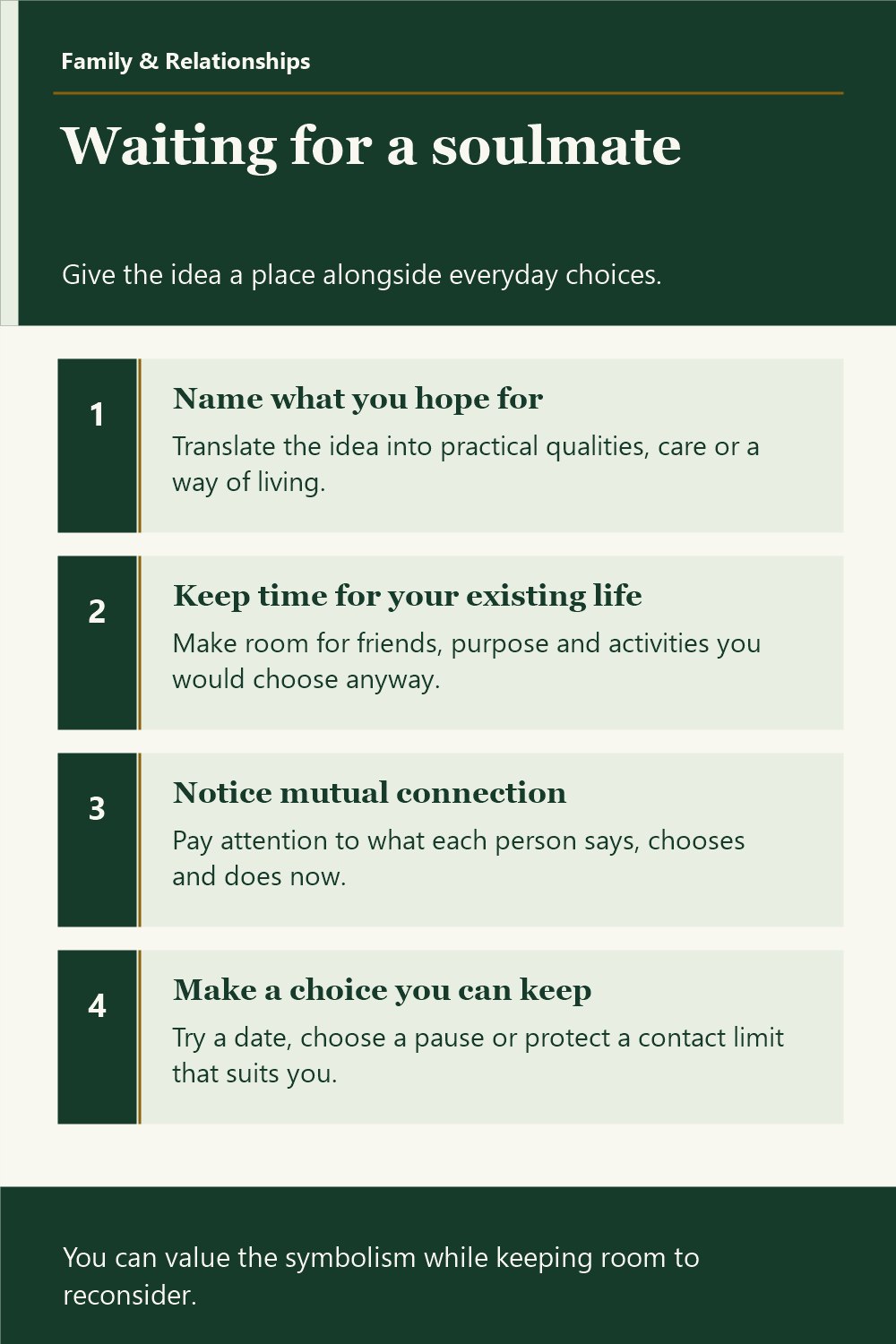
Read the infographic in text
Waiting for a soulmate
Give the idea a place alongside everyday choices.
- Name what you hope for Translate the idea into practical qualities, care or a way of living.
- Keep time for your existing life Make room for friends, purpose and activities you would choose anyway.
- Notice mutual connection Pay attention to what each person says, chooses and does now.
- Make a choice you can keep Try a date, choose a pause or protect a contact limit that suits you.
You can value the symbolism while keeping room to reconsider.