

A major life change can lead you to reconsider your beliefs, notice experiences differently or seek spiritual meaning. Some people describe this as a psychic awakening. You may use the phrase for a renewed interest in intuition, meaningful dreams or a stronger sense of spiritual connection.
As you explore that meaning, consider the situation around it too. An accident, bereavement, illness or becoming a parent brings different practical needs. Start with what you noticed, what support you want and how the experience is affecting your everyday life.
On this page
1. What the phrase can mean
People use “psychic awakening” in different ways. You might mean renewed interest in intuition, a stronger spiritual connection, meaningful dreams or a change in how you interpret everyday experiences.
There is no single experience you must have or ability you must demonstrate. You can explore a spiritual understanding without deciding immediately what caused an experience or what it predicts.
2. Two accounts after accidents
Two accounts describe mediums experiencing awakenings after accidents. One concerns a woman whose awakening followed a severe car accident that left her comatose. The other concerns a man whose gifts awakened after an accident.
These accounts concern particular experiences. They do not establish that an accident or coma causes psychic abilities, or that another person should expect the same experience.
If you have recently had an accident or hit your head, seek medical advice about new or worrying symptoms. The NHS guidance on head injury and concussion explains when help may be urgent. Spiritual meaning can matter to you alongside attending to your health.
3. After trauma or illness, support matters in its own right
You may reconsider beliefs and priorities during a difficult period. You may also want rest, privacy, practical help or someone you trust to listen. You do not need to call suffering a gift or find a spiritual purpose in it.
If abuse or illness has changed how safe you feel, support for recovery deserves attention regardless of your interpretation. Be cautious of anyone who tells you that you must endure harm, stop needed care or pay for repeated sessions to develop an ability.
4. After bereavement, allow your own meaning
A dream, familiar song or coincidence may feel like a connection with someone who died. You can value that experience without having to persuade anyone else or treat every event as a message you must decode.
Other people may not experience signs, and that does not measure how much they loved someone. Make room for grief, ordinary memories and the kinds of support that help you day to day.
If loss is affecting your routines, our guide to After Losing Love: Grief, Support and Practical Next Steps discusses ways to cover immediate needs and seek support.
5. In parenthood, combine attention with practical support
Becoming a parent or caring for a child can change what you notice and what matters to you. You may describe that awareness as intuitive. Learning a child’s cues also involves time, observation, questions and help from other people.
There is no requirement that a parent instantly knows every need. Ask for practical or health support when you need it, and check concerns about you or the child rather than assuming a spiritual explanation answers them.
6. Explore practices without pressure
Quiet reflection, journalling or a spiritual practice may give you a way to explore what an experience means to you. If you choose to explore spiritual healing, keep the choice voluntary and consider the cost, your comfort and any claims being made.
No practice needs to promise a guaranteed awakening to be personally meaningful. You can pause, decline a suggestion or choose a different kind of support.
A short journal entry can help keep the experience and its interpretation distinct:
- What did I notice, as specifically as I can describe it?
- What meanings or explanations have I considered?
- What practical support or next step would help regardless of the interpretation?
You can hold a spiritual belief while giving yourself time, protecting your choices and attending to ordinary needs.
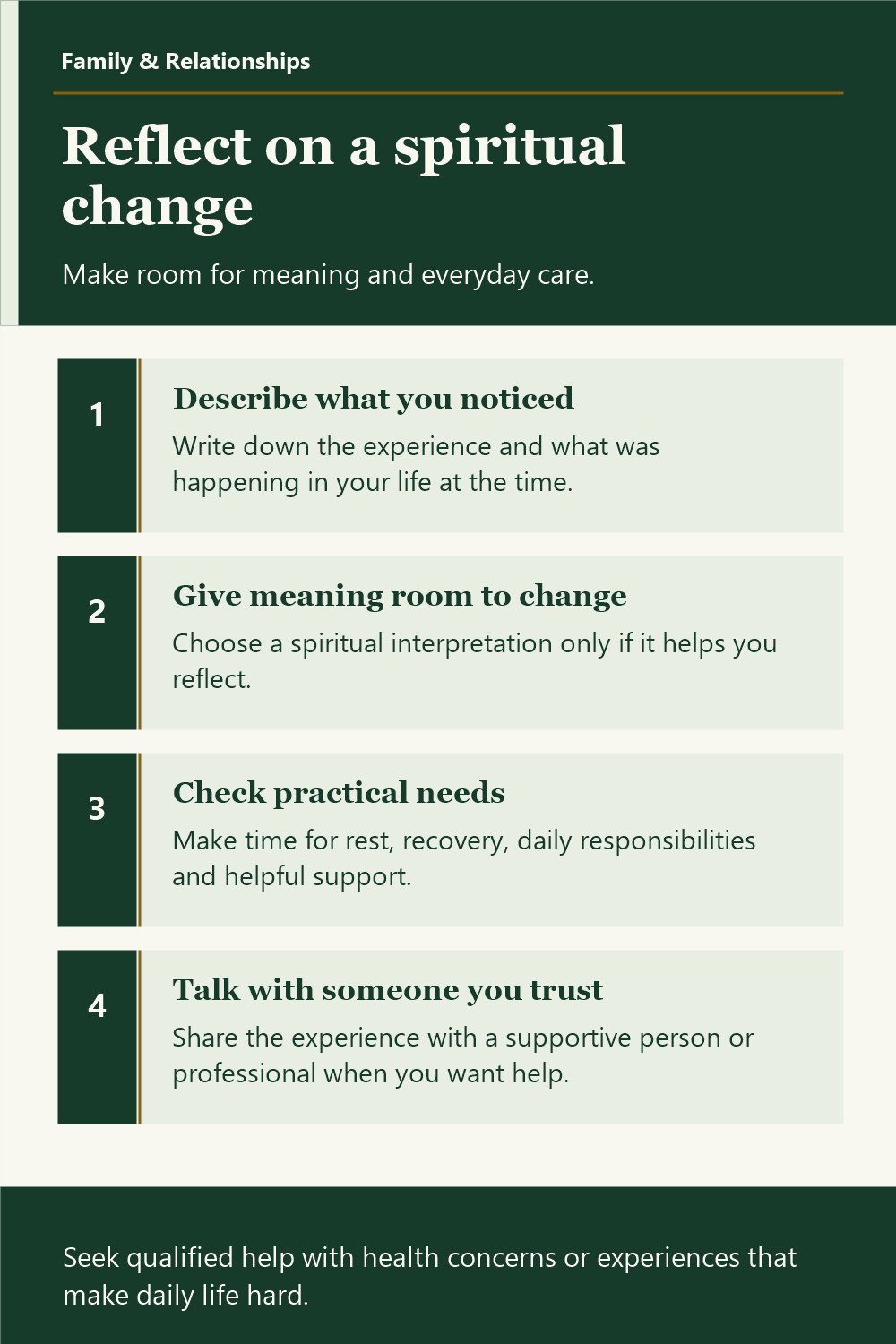
Read the infographic in text
Reflect on a spiritual change
Make room for meaning and everyday care.
- Describe what you noticed Write down the experience and what was happening in your life at the time.
- Give meaning room to change Choose a spiritual interpretation only if it helps you reflect.
- Check practical needs Make time for rest, recovery, daily responsibilities and helpful support.
- Talk with someone you trust Share the experience with a supportive person or professional when you want help.
Seek qualified help with health concerns or experiences that make daily life hard.