

Calling someone an “old soul” can express a feeling of familiarity, thoughtfulness or shared spiritual meaning. That connection may matter deeply to you. Understanding a partner still takes time and attention to how you treat each other.
If you are dating someone you describe this way, use the idea to begin a conversation. Ask about their preferences and values, then notice whether everyday behavior supports the closeness you feel.
1. Explain what the phrase means to you
For some people, “old soul” reflects a belief in previous lives or a spiritual connection. Others use it to describe a reflective temperament, traditional interests or feeling wise beyond one’s years. Your partner may understand the phrase differently, or may prefer another description.
Try asking, “When I call you an old soul, I mean that I enjoy your thoughtful approach. Does that description feel right to you?” This leaves room for their own identity instead of assigning them a role.
You can share an intuition without expecting the other person to confirm the same history or belief. Familiarity can be meaningful while you are still learning about each other.
2. Assess behavior over time
A label cannot tell you whether someone will be faithful, handle conflict fairly or want the same relationship. Quietness, age, clothing and spiritual interests do not establish those qualities. Discuss exclusivity and other commitments directly.
Notice ordinary patterns: do they keep arrangements, tell you when plans change and listen when you disagree? Can they acknowledge a mistake without making you responsible for their reaction?
Being described as wise does not make someone the final authority on your choices. You should both be able to question advice, change your minds and bring your own experience to the relationship.
3. Make room for different social needs
Your partner may enjoy solitude or staying home, but ask rather than assuming. You might love lively gatherings while they prefer a quiet evening. Neither preference makes one person more mature.
Agree on a rhythm that includes time together and independent friendships. For example: “I would enjoy one evening at home together this week, and I am seeing my friends on Saturday.”
Time alone should not require you to tolerate unexplained disappearances or give up your own interests. If contact feels unpredictable, discuss availability and what each of you can reasonably expect.
4. Separate honesty from hurtful delivery
Directness can make a relationship easier to understand. It still needs care. A preference for honesty does not justify insults, humiliating jokes or dismissing your feelings as a lesson you need to learn.
You might say, “Please tell me when something is bothering you, but speak about the situation without calling me names.” Notice whether the person makes an effort to respond respectfully.
Love is respect’s guide to personal boundaries explains how limits can concern emotional, physical and digital comfort. Your spiritual connection does not remove your right to set them.
5. Keep care mutual
A partner can offer insight and support without becoming your permanent teacher or rescuer. Equally, someone who seems calm may still need reassurance, practical help or space to be uncertain.
Look at who initiates plans, checks in, shares tasks and repairs disagreements. The balance may change during a difficult period, but both people’s needs should remain part of the conversation.
Ask, “What kind of support would help this week, and what can each of us realistically offer?” Specific requests are easier to respond to than expecting someone to understand everything intuitively.
6. Let compatibility guide your next decision
Talk about the practical choices behind a lasting relationship: commitment, children, finances, where to live, intimacy and how you spend time. A powerful feeling does not settle differences in those areas.
If familiarity draws you toward reconnecting with an ex, consider what has changed in the patterns that previously hurt you. Feeling connected is one part of that decision.
You can value what a person means to you and still decide that the relationship does not meet your needs. Keep spiritual meaning alongside your freedom to choose, your boundaries and the care you actually experience.
Read the infographic in text
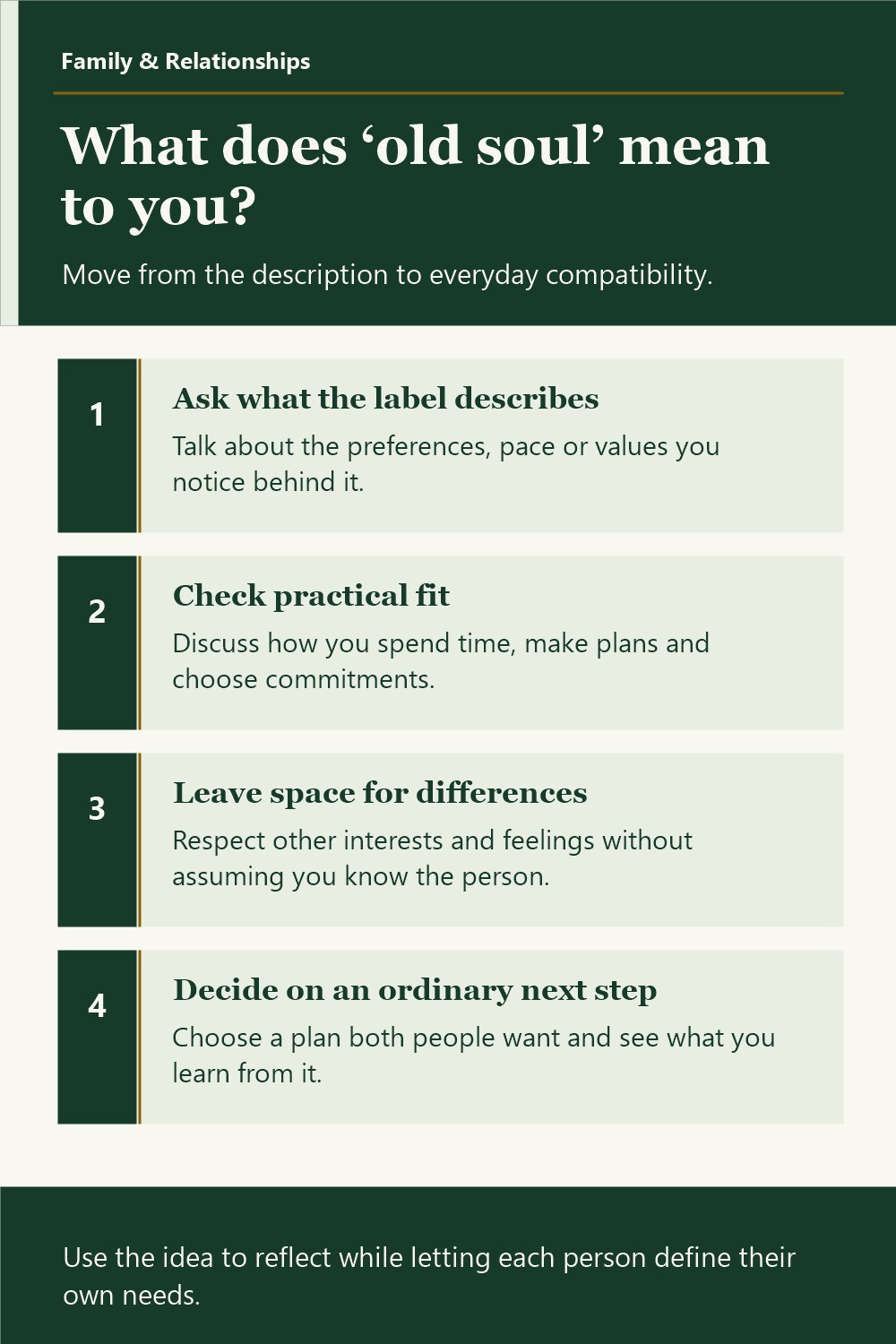
What does ‘old soul’ mean to you?
Move from the description to everyday compatibility.
- Ask what the label describes Talk about the preferences, pace or values you notice behind it.
- Check practical fit Discuss how you spend time, make plans and choose commitments.
- Leave space for differences Respect other interests and feelings without assuming you know the person.
- Decide on an ordinary next step Choose a plan both people want and see what you learn from it.
Use the idea to reflect while letting each person define their own needs.