

When a long-distance relationship feels difficult, identify the pattern before deciding that either person needs to try harder. Missed calls, travel costs and uncertainty about the future need different kinds of attention.
This guide helps you review an arrangement you are already living with. For a conversation about expectations from the start, use these six agreements for a long-distance relationship.
1. Name the problem you want to change
Describe a recent situation without turning it into a verdict about the entire relationship. “Our last three calls started late, and I lost sleep waiting” gives you something specific to address.
Separate practical obstacles from willingness. Shift work, caring responsibilities, disability, unreliable internet and time zones can limit contact. The useful question is how both people respond to those limits.
Choose one issue for the first conversation. A list of every disappointment can make it difficult to agree on any next step.
2. Compare expectations with actual capacity
Talk about what you each understood the arrangement to be. You may have expected daily video calls while your partner thought a few messages and two longer calls would work.
Ask what is manageable in an ordinary week, including rest and time with friends. A promise that depends on someone constantly sacrificing sleep or other responsibilities is unlikely to be a comfortable routine.
You might say, “I want reliable contact more than constant contact. Which two times can we both usually protect, and how will we handle a cancellation?”
3. Change one contact habit
Test a small adjustment instead of demanding more of every kind of communication. A planned audio call may work better than repeated video calls on a poor connection. A voice message can offer contact when schedules do not overlap.
Agree on a practical response to delays: send a brief update when possible, offer another time and avoid leaving someone waiting without an explanation. Allow for genuine emergencies and days when communication is limited.
Keep room for ordinary conversation and enjoyable shared activities. Every call does not need to become an assessment of the relationship. The communication guide on LifeMatesNow offers another place to continue the discussion.
4. Review travel and shared effort
Discuss the full cost of a visit: fares or fuel, accommodation, meals, leave from work and recovery time. Decide what each person can afford before booking. Equal care does not always mean spending identical amounts.
Consider who plans, travels, hosts and rearranges other commitments. If one person is carrying most of that work, ask what can change. A less frequent visit that is affordable may be more workable than an ambitious promise.
If you have not met in person, keep your own travel and exit arrangements and choose a public first meeting. Do not send money because a romantic contact pressures you to solve an urgent problem.
5. Respond to uncertainty without monitoring
Ask about a broken agreement directly. “We said we would tell each other if we started dating someone else. Is that still the agreement you want?” is clearer than trying to infer commitment from online activity.
Being apart does not entitle either person to passwords, constant location updates or proof of every friendship. You can ask for clarity while respecting privacy and the right to say no.
If you are returning to dating later in life, the guide to online dating after 50 may help you consider your preferences. Your experience and age do not remove the need to check what this particular person wants.
6. Agree on a review point
Choose one change and a realistic time to discuss how it went. For example, try two planned calls and a clear cancellation message for the next few weeks, then ask whether contact feels more dependable.
Notice behavior as well as intentions. Are both people making the agreed effort? Can you raise concerns without ridicule, threats or demands to abandon other parts of your life?
Discuss any plan to live closer in concrete stages, including uncertainties. You do not have to promise a move you cannot make. If your needs remain incompatible, ending the relationship can be a considered choice rather than evidence that you failed to stay positive.
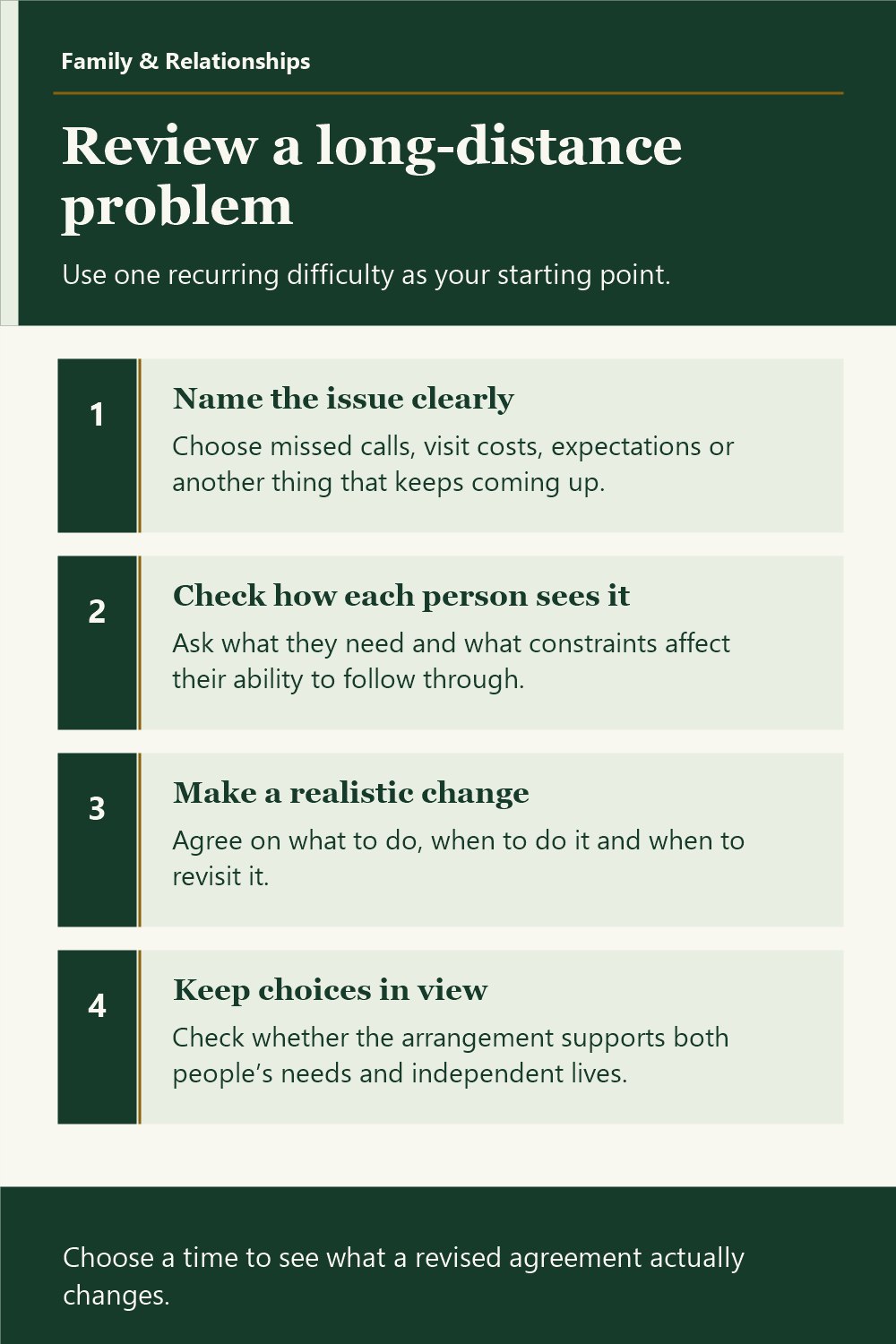
Read the infographic in text
Review a long-distance problem
Use one recurring difficulty as your starting point.
- Name the issue clearly Choose missed calls, visit costs, expectations or another thing that keeps coming up.
- Check how each person sees it Ask what they need and what constraints affect their ability to follow through.
- Make a realistic change Agree on what to do, when to do it and when to revisit it.
- Keep choices in view Check whether the arrangement supports both people’s needs and independent lives.
Choose a time to see what a revised agreement actually changes.