

After infidelity, saying that you want to save a marriage does not settle what happens next. The person who broke an agreement can take responsibility, while the other partner has the right to decide what they need and whether they want to continue.
Rebuilding trust takes more than an apology or a promise of a fresh start. These questions can help you discuss the situation without demanding immediate forgiveness or treating reconciliation as a guaranteed outcome.
1. Can the breach be named without shifting blame?
If you were unfaithful, describe the agreement you broke and acknowledge its effect. Difficulties in the relationship may need attention, but they do not transfer responsibility for your decision to your partner.
A useful beginning is, “I chose to hide this, and I understand that it changes what you can trust.” Avoid asking your partner to reassure you before they have had room to respond.
If you were betrayed, you do not have to decide immediately how much to discuss or whether to stay. Taking time to understand your options is a legitimate choice.
2. What information is needed for an informed decision?
Concealing relevant facts or giving a changing account can make decisions harder. Discuss what happened, whether contact continues and what practical or health consequences may affect your partner.
Honesty does not require imposing graphic sexual details that the other person does not want. Ask what they need to know, answer truthfully and be clear about anything you genuinely do not remember.
Some couples want professional help structuring these conversations. A counselor can help with the discussion, but cannot promise an outcome or decide what either person must forgive.
3. What boundaries will apply to future contact?
Discuss whether the outside relationship has ended and how any necessary contact will be managed. A shared workplace or parenting responsibility may require a practical plan rather than a promise that no interaction can ever occur.
Be specific about what will be disclosed, how unexpected messages will be handled and when you will review the arrangement. Do not delete relevant information to create an appearance of transparency.
Agreements about communication and privacy need clear consent and limits. An affair does not justify threats, coercion or unlimited surveillance, and a partner can decline an arrangement they cannot accept.
4. What health questions need private professional advice?
If there may have been sexual exposure outside the relationship, speak with a healthcare professional about STI testing and any other relevant care. Share information your partner needs to make informed choices about sex.
The CDC explains that the tests and timing you need depend on your circumstances; some infections have no symptoms. A clinician can advise you without relying on a general checklist.
Testing is part of caring for health, not a substitute for consent or a guarantee that trust has been restored. Either person can choose to pause sexual contact.
5. What would change in everyday life?
Identify changes connected to what actually happened: keeping agreed plans, being truthful about contact or setting aside time for difficult conversations. Do not expect a gift or one good weekend to settle the issue.
Make agreements you can describe and review. For example, “If a work event includes that person, we will discuss the arrangements beforehand” is clearer than “I will never make you worry again.”
Trust may change unevenly, and a question returning does not automatically mean that every previous conversation was pointless. At the same time, neither person has to agree to endless interrogation or humiliation.
6. Do both of you freely want to continue?
You may agree to explore reconciliation, remain uncertain or decide to separate. Forgiveness and staying married are separate decisions; neither is owed in exchange for effort.
If you are both considering repair, these relationship questions can help you discuss needs and recurring patterns. Choose a time to review what has changed rather than demanding a final commitment immediately.
Where there is intimidation or fear, seek private support before trying to negotiate together. The goal is an informed, freely chosen next step, whether that leads toward rebuilding or ending the relationship.
Read the infographic in text
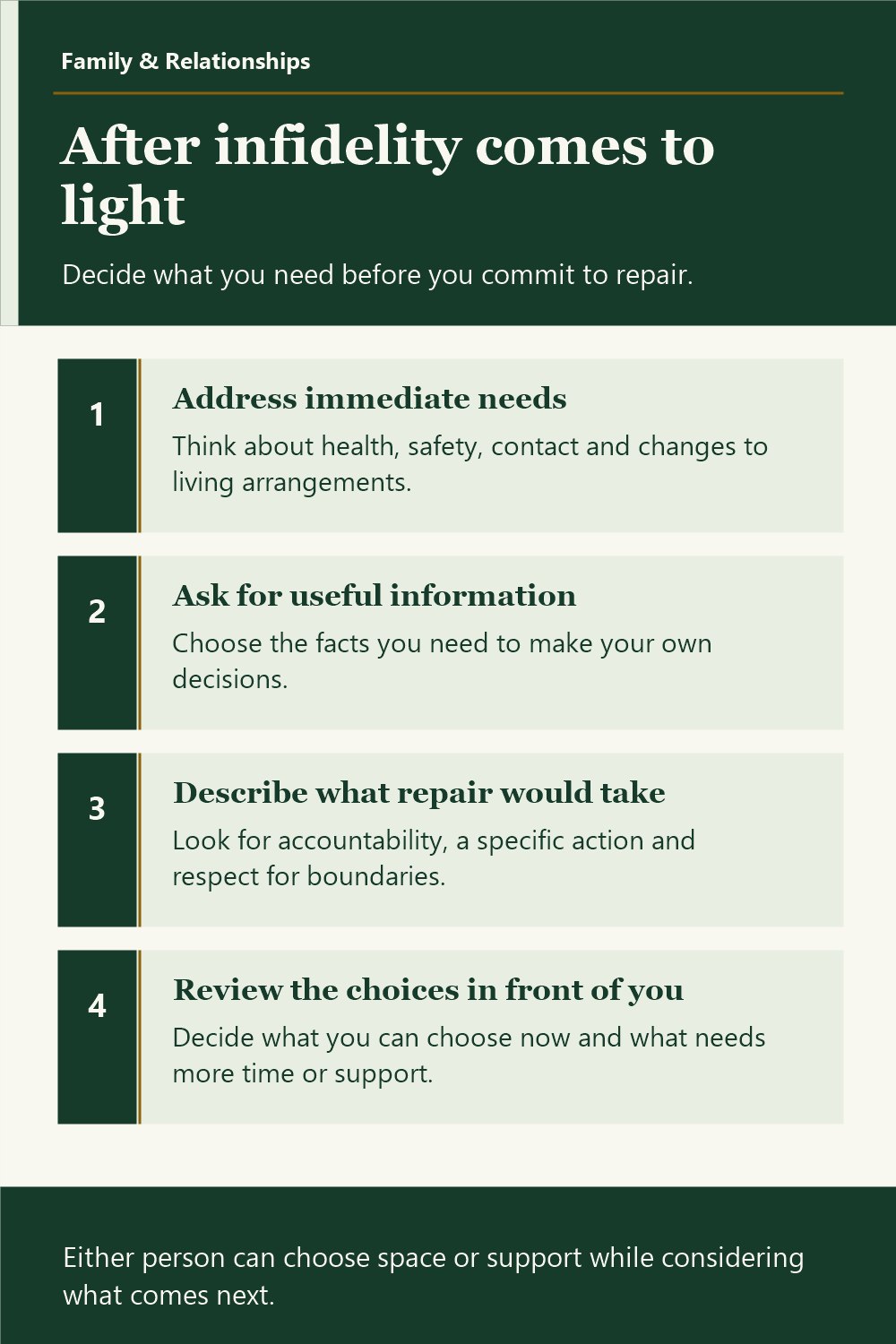
After infidelity comes to light
Decide what you need before you commit to repair.
- Address immediate needs Think about health, safety, contact and changes to living arrangements.
- Ask for useful information Choose the facts you need to make your own decisions.
- Describe what repair would take Look for accountability, a specific action and respect for boundaries.
- Review the choices in front of you Decide what you can choose now and what needs more time or support.
Either person can choose space or support while considering what comes next.